


CFS2 > Page 1
4.14Mb (21 downloads)
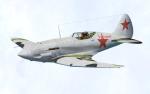
Mikoyan Gurevich Mig-3 late version
Unit: 148 IAP
The late Spanish Civil war experience showed the Soviet fighter aircraft to be inferior to the German Bf 109 which convinced Stalin that the Soviet Air Force needed to develop more modern fighter aircraft. The Mig-1 was one of several types rushed through design and into service in 1939 /1940. Major teething problems were encountered and the type went through several design changes resulting in the Mig-3. The Mig-3 was widely in service when the German invasion began. The late version incorporated a longer nose to accommodate space for more ammunition. Designed as a high altitude interceptor, the Mig-3 was forced to fight at low altitudes and even in ground attacks where it was unsuited and its performance was inferior to German types. Nevertheless it was available in large numbers and continued in service well into 1943.
Credits
Captain Kurt: Aircraft model, and Rs-82 rockets and rack
UncleTgt: Paint schemes and air files
Shessi: Pilot figure
Kelticheart: Prop blurred texture
Posted Apr 23, 2026 18:53 by Captain Kurt and UncleTgt
6.55Mb (18 downloads)
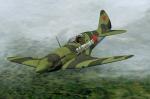
Mikoyan Gurevich Mig-3 late version w/ patriotic slogan Za Rodinu
The late Spanish Civil war experience showed the Soviet fighter aircraft to be inferior to the German Bf 109 which convinced Stalin that the Soviet Air Force needed to develop more modern fighter aircraft. The Mig-1 was one of several types rushed through design and into service in 1939 /1940. Major teething problems were encountered and the type went through several design changes resulting in the Mig-3. The Mig-3 was widely in service when the German invasion began. The late version incorporated a longer nose to accommodate space for more ammunition. Designed as a high altitude interceptor, the Mig-3 was forced to fight at low altitudes and even in ground attacks where it was unsuited and its performance was inferior to German types. Nevertheless it was available in large numbers and continued in service well into 1943.
Credits
Captain Kurt: Aircraft model, and Rs-82 rockets and rack
UncleTgt: Paint schemes and air files
Shessi: Pilot figure
Kelticheart: Prop blurred texture
Posted Apr 23, 2026 18:50 by Captain Kurt and UncleTgt
6.81Mb (13 downloads)
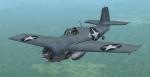
Grumman F4F-4 Wildcat VMF-224, Guadalcanal September, 1942
The Wildcat was the only effective fighter available to the United States Navy and Marine Corps in the Pacific from 1941 to 1943. While the Wildcat was still outperformed by the faster, more maneuverable, and longer ranged Mitsubishi A6M Zero, the F4F's ruggedness combined with effective US pilot's tactics made it more successful in combat. The first operational version, the F4F-3 had a fixed wing which limited the number a fleet aircraft carrier could operate to 18. Grumman had proposed incorporating a folding wing to the Wildcat in 1940 and the Navy had awarded a contract for the F4F-4 in 1941. The folding wings would allow the fleet carriers to operate 27 Wildcats. The Battle of the Coral Sea had proved the need for more fighters for CAP and escort, and the Navy rushed to replace the fixed wing F4F-3 with the new F4F-4 before the next inevitable carrier battle which turned out to be Midway. Navy and Marine pilots weren't thrilled with the F4F-4 as it was heavier, less maneuverable, and had added 2 more machine guns which reduced the ammunition to each and reduced the firing time. But it was what they had. They made the most of it that they could, and held the line through 1943.
Credits
Captain Kurt: Aircraft model, drop tank, bomb rack, bomb, VC, paint textures, aircraft flight files, and .dp
Shessi: Pilot figure
Morton: 2D F4F instrument panel modified to an F4F-3 version
Kelticheart: Prop blurred texture
Microsoft: Gauges and .air file
Posted Apr 17, 2026 17:16 by Captain Kurt
7.06Mb (11 downloads)
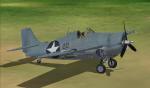
Grumman F4F-4 Wildcat VMF-121, Guadalcanal October, 1942
The Wildcat was the only effective fighter available to the United States Navy and Marine Corps in the Pacific from 1941 to 1943. While the Wildcat was still outperformed by the faster, more maneuverable, and longer ranged Mitsubishi A6M Zero, the F4F's ruggedness combined with effective US pilot's tactics made it more successful in combat. The first operational version, the F4F-3 had a fixed wing which limited the number a fleet aircraft carrier could operate to 18. Grumman had proposed incorporating a folding wing to the Wildcat in 1940 and the Navy had awarded a contract for the F4F-4 in 1941. The folding wings would allow the fleet carriers to operate 27 Wildcats. The Battle of the Coral Sea had proved the need for more fighters for CAP and escort, and the Navy rushed to replace the fixed wing F4F-3 with the new F4F-4 before the next inevitable carrier battle which turned out to be Midway. Navy and Marine pilots weren't thrilled with the F4F-4 as it was heavier, less maneuverable, and had added 2 more machine guns which reduced the ammunition to each and reduced the firing time. But it was what they had. They made the most of it that they could, and held the line through 1943.
Credits
Captain Kurt: Aircraft model, drop tank, bomb rack, bomb, VC, paint textures, aircraft flight files, and .dp
Shessi: Pilot figure
Morton: 2D F4F instrument panel modified to an F4F-3 version
Kelticheart: Prop blurred texture
Microsoft: Gauges and .air file
Posted Apr 17, 2026 17:14 by Captain Kurt
6.05Mb (10 downloads)
Grumman F4F-4 Wildcat VMF-112, Lt. Jefferson DeBlanc Guadalcanal January 1943
The Wildcat was the only effective fighter available to the United States Navy and Marine Corps in the Pacific from 1941 to 1943. While the Wildcat was still outperformed by the faster, more maneuverable, and longer ranged Mitsubishi A6M Zero, the F4F's ruggedness combined with effective US pilot's tactics made it more successful in combat. The first operational version, the F4F-3 had a fixed wing which limited the number a fleet aircraft carrier could operate to 18. Grumman had proposed incorporating a folding wing to the Wildcat in 1940 and the Navy had awarded a contract for the F4F-4 in 1941. The folding wings would allow the fleet carriers to operate 27 Wildcats. The Battle of the Coral Sea had proved the need for more fighters for CAP and escort, and the Navy rushed to replace the fixed wing F4F-3 with the new F4F-4 before the next inevitable carrier battle which turned out to be Midway. Navy and Marine pilots weren't thrilled with the F4F-4 as it was heavier, less maneuverable, and had added 2 more machine guns which reduced the ammunition to each and reduced the firing time. But it was what they had. They made the most of it that they could, and held the line through 1943.
Credits
Captain Kurt: Aircraft model, drop tank, bomb rack, bomb, VC, paint textures, aircraft flight files, and .dp
Shessi: Pilot figure
Morton: 2D F4F instrument panel modified to an F4F-3 version
Kelticheart: Prop blurred texture
Microsoft: Gauges and .air file
Posted Apr 17, 2026 17:13 by Captain Kurt
11.80Mb (40 downloads)
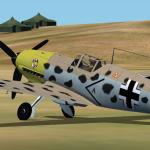
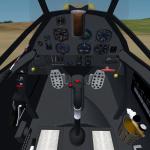
This is the "Emil" 7 in 2 versions. The E-7 was capable of 500 KPH at sea level 1.33ata/2400rpm. The DB601Aa powerplant made 1175 HP 1.42ata/2500rpm. This model comes with weapons included. The aircraft is created by Vincent Farnham. The weapons are created by Design Team Daedalus permission granted by Captain Kurt. Special thanks to them for their fine work.
Posted Apr 11, 2026 02:41 by Vincent Farnham/vincentf563@msn.com
6.81Mb (2 downloads)
Grumman F4F-4 Wildcat VMF-224, Guadalcanal September, 1942
The Wildcat was the only effective fighter available to the United States Navy and Marine Corps in the Pacific from 1941 to 1943. While the Wildcat was still outperformed by the faster, more maneuverable, and longer ranged Mitsubishi A6M Zero, the F4F's ruggedness combined with effective US pilot's tactics made it more successful in combat. The first operational version, the F4F-3 had a fixed wing which limited the number a fleet aircraft carrier could operate to 18. Grumman had proposed incorporating a folding wing to the Wildcat in 1940 and the Navy had awarded a contract for the F4F-4 in 1941. The folding wings would allow the fleet carriers to operate 27 Wildcats. The Battle of the Coral Sea had proved the need for more fighters for CAP and escort, and the Navy rushed to replace the fixed wing F4F-3 with the new F4F-4 before the next inevitable carrier battle which turned out to be Midway. Navy and Marine pilots weren't thrilled with the F4F-4 as it was heavier, less maneuverable, and had added 2 more machine guns which reduced the ammunition to each and reduced the firing time. But it was what they had. They made the most of it that they could, and held the line through 1943.
Credits
Captain Kurt: Aircraft model, drop tank, bomb rack, bomb, VC, paint textures, aircraft flight files, and .dp
Shessi: Pilot figure
Morton: 2D F4F instrument panel modified to an F4F-3 version
Kelticheart: Prop blurred texture
Microsoft: Gauges and .air file
Posted Apr 8, 2026 15:32 by Captain Kurt
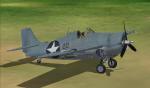
7.06Mb (3 downloads)
Grumman F4F-4 Wildcat VMF-121, Guadalcanal October, 1942
The Wildcat was the only effective fighter available to the United States Navy and Marine Corps in the Pacific from 1941 to 1943. While the Wildcat was still outperformed by the faster, more maneuverable, and longer ranged Mitsubishi A6M Zero, the F4F's ruggedness combined with effective US pilot's tactics made it more successful in combat. The first operational version, the F4F-3 had a fixed wing which limited the number a fleet aircraft carrier could operate to 18. Grumman had proposed incorporating a folding wing to the Wildcat in 1940 and the Navy had awarded a contract for the F4F-4 in 1941. The folding wings would allow the fleet carriers to operate 27 Wildcats. The Battle of the Coral Sea had proved the need for more fighters for CAP and escort, and the Navy rushed to replace the fixed wing F4F-3 with the new F4F-4 before the next inevitable carrier battle which turned out to be Midway. Navy and Marine pilots weren't thrilled with the F4F-4 as it was heavier, less maneuverable, and had added 2 more machine guns which reduced the ammunition to each and reduced the firing time. But it was what they had. They made the most of it that they could, and held the line through 1943.
Credits
Captain Kurt: Aircraft model, drop tank, bomb rack, bomb, VC, paint textures, aircraft flight files, and .dp
Shessi: Pilot figure
Morton: 2D F4F instrument panel modified to an F4F-3 version
Kelticheart: Prop blurred texture
Microsoft: Gauges and .air file
Posted Apr 8, 2026 15:30 by Captain Kurt
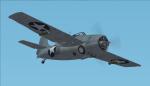
6.05Mb (1 downloads)
Grumman F4F-4 Wildcat VMF-112, Lt. Jefferson DeBlanc Guadalcanal January 1943
The Wildcat was the only effective fighter available to the United States Navy and Marine Corps in the Pacific from 1941 to 1943. While the Wildcat was still outperformed by the faster, more maneuverable, and longer ranged Mitsubishi A6M Zero, the F4F's ruggedness combined with effective US pilot's tactics made it more successful in combat. The first operational version, the F4F-3 had a fixed wing which limited the number a fleet aircraft carrier could operate to 18. Grumman had proposed incorporating a folding wing to the Wildcat in 1940 and the Navy had awarded a contract for the F4F-4 in 1941. The folding wings would allow the fleet carriers to operate 27 Wildcats. The Battle of the Coral Sea had proved the need for more fighters for CAP and escort, and the Navy rushed to replace the fixed wing F4F-3 with the new F4F-4 before the next inevitable carrier battle which turned out to be Midway. Navy and Marine pilots weren't thrilled with the F4F-4 as it was heavier, less maneuverable, and had added 2 more machine guns which reduced the ammunition to each and reduced the firing time. But it was what they had. They made the most of it that they could, and held the line through 1943.
Credits
Captain Kurt: Aircraft model, drop tank, bomb rack, bomb, VC, paint textures, aircraft flight files, and .dp
Shessi: Pilot figure
Morton: 2D F4F instrument panel modified to an F4F-3 version
Kelticheart: Prop blurred texture
Microsoft: Gauges and .air file
Posted Apr 8, 2026 15:28 by Captain Kurt
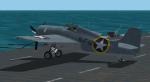
8.03Mb (36 downloads)
Grumman F4F-4 Wildcat VF-9 USS Ranger (CV 4) Ensign Hamilton McWorther, Operation Torch November, 1942
The Wildcat was the only effective fighter available to the United States Navy and Marine Corps in the Pacific from 1941 to 1943. While the Wildcat was still outperformed by the faster, more maneuverable, and longer ranged Mitsubishi A6M Zero, the F4F's ruggedness combined with effective US pilot's tactics made it more successful in combat. The first operational version, the F4F-3 had a fixed wing which limited the number a fleet aircraft carrier could operate to 18. Grumman had proposed incorporating a folding wing to the Wildcat in 1940 and the Navy had awarded a contract for the F4F-4 in 1941. The folding wings would allow the fleet carriers to operate 27 Wildcats. The Battle of the Coral Sea had proved the need for more fighters for CAP and escort, and the Navy rushed to replace the fixed wing F4F-3 with the new F4F-4 before the next inevitable carrier battle which turned out to be Midway. Navy and Marine pilots weren't thrilled with the F4F-4 as it was heavier, less maneuverable, and had added 2 more machine guns which reduced the ammunition to each and reduced the firing time. But it was what they had. They made the most of it that they could, and held the line through 1943.
Credits
Captain Kurt: Aircraft model, drop tank, bomb rack, bomb, VC, paint textures, aircraft flight files, and .dp
Shessi: Pilot figure
Morton: 2D F4F instrument panel modified to an F4F-3 version
Kelticheart: Prop blurred texture
Microsoft: Gauges and .air file
Posted Apr 8, 2026 15:26 by Captain Kurt