


All Files > Page 1
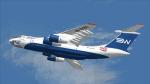
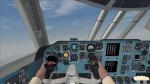
FS2004 IL-76TD-90
(Category: FS2004 > Civil Jets)
239.27Mb (22 downloads)
IL-76TD with modern PS-90A-76 engines. Not many operators are flying it, but at least every single unit is still flying. Features VC with navigator's station.
Posted May 3, 2026 10:57 by fs10inator
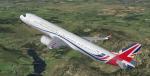
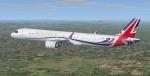
FSX/P3D Airbus A321NEO (A321-251NX) Titan Airways op/f UK Government package
(Category: FSX > Civil Jets)
186.79Mb (31 downloads)
FSX/P3D Airbus A321NEO (A321-251NX) Titan Airways op/f UK Government package. Standsted based Titan Airways operates the Airbus A321NX aircraft customised for UK Government, VIP and Royal family transport.
Model by Project Airbus with NEO engine mod by Bret Herman. Updated VC by Speedbird77 with built in FMC by Garret Smith. Includes A320 operation manual and checklist. PW sounds included. Textured, assembled for P3D v5.4 by Chris Evans. Should work in FSX and other P3D
Posted May 3, 2026 10:17 by chris evans
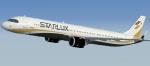
FSX/P3D Airbus A321NEO (A321-251NX) Starlux Airlines package
(Category: FSX > Civil Jets)
91.45Mb (76 downloads)
FSX/P3D Airbus A321NEO (A321-251NX) Starlux Airlines package. Taiwanese airline, Starlux currently operates 13 Airbus A321NEO with another 14 on order, operating flights to throughout Asia as well as Europe and the USA.
Model by Project Airbus with NEO engine mod by Bret Herman. Updated VC by Speedbird77 with built in FMC by Garret Smith. Includes A320 operation manual and checklist. PW sounds included. Textured, assembled for P3D v5.4 by Chris Evans. Should work in FSX and other P3D
Posted May 2, 2026 13:07 by chris evans
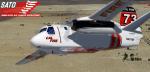

P3DV4+ S-2F3AT Turbo Tracker Cal Fire Pack
(Category: Prepar3d > Props)
340.88Mb (33 downloads)
This is a significant update package for Milton Shupe's S-2T Turbo Tracker. Done with Milton's permission, this pack takes his and crew's original work and updates it for the newer sims with updated 4k textures, PBR, and several other lighting, flight dynamic, sound, and contact point modifications. The package includes all 23 aircraft of Cal Fire's current firefighting fleet of S-2F3ATs, commonly referred to as an "S-2T" or S-2 Turbo Tracker. Unlike the Conair Turbo Firecat, based on the S-2F1, the Marsh manufactured S-2F3AT is based upon the larger S-2F3 airframe. The Turbo Firecats are powered by a PT-6 variant turboprop rated at 1,220 SHP each. While the Marsh Turbo Trackers are powered by a more powerful pair of Garrett TPE-331-14GR turboprops. This also yields not only a much higher top speed than the Turbo Firecats, but also an increased fire retardant capacity of 1,200 US Gallons versus the Turbo Firecat's 897 US Gallons. But at a loss of endurance compared to the Turbo Firecat's slightly more than 5 hours, the S-2F3ATs falls down to 4.5 hours. Visually the two aircraft look very similar. But things that ID them over the Turbo Firecat are the S-2F3AT's longer fuselage, longer and rounded wings, lack of exterior fuel tanks, and a slightly pointed aerodynamic nose. The S-2F3AT is an exclusively modified airframe for the California Department of Forestry and Fire Protection (Cal Fire). No other agency or country flies the S-2F3ATs. Cal Fire operates 23 S-2F3ATs in total. 22 are based across 13 air attack bases strategically positioned throughout the state of California with a single spare kept at Cal Fire's HQ in Sacramento for relief and additional resource stacking, if needed. Cal Fire uses the S-2T in it's fast initial attack program to keep fires small by being able to dispatch S-2Ts anywhere in the entire state in 20 minutes or less. And with S-2Ts capable of flying near or at 300 mph, reinforcements can be on scene very fast from other bases. The S-2F3AT arguably is one of the best Initial Attack aircraft used in aerial firefighting in the United States. No other aircraft in it's category can compete with it's speed, agility, and load capacity. It's closest comparable platform in the industry is the much larger, slower, and more expensive Viking CL-415/215T. Pack includes all 23 unique aircraft numbers and base assignments, along with 2 additional duty worn paints for T-73 and T-83. Original aircraft by Milton Shupe, updates by Nicholas Mitchell "Scorch00."
Posted May 2, 2026 03:18 by Nicholas Mitchell
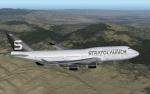
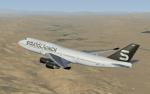
FSX/P3D Boeing 747-400 Stratolaunch package
(Category: FSX > Civil Jets)
52.65Mb (84 downloads)
FSX/P3D Boeing 747-400 Stratolaunch package.
Based in California's Mojave desert, Stratolaunch is a company intended for high altitude testing and rocket launch. They currently operate the ex Virgin Orbit 'Cosmic Girl' 747 and have renamed it to Spirit of Mojave.
High quality Project Opensky Boeing 747-400f FSX native model with the much improved Boeing 747 internal model (VC) from Alejandro Rojas Lucenda (Manual included). Model includes ground cargo servicing, stairs (FSX - Go to Views - Instrument Panel -Posky Utility. P3D go to Vehicle - Instrument Panel -).
Added 747 sounds, edited views, panel.
Thank you to Project Opensky/Skyspirit/TDS for their fantastic contribution to the worldwide flight simulation community.
Also includes the Boeing 747 VC textures upgrade. Added wing views.
Textured and assembled for P3D by Chris Evans.
Posted May 1, 2026 14:57 by chris evans
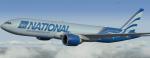
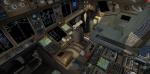
FSX/P3D Boeing 777F National Airlines package
(Category: FSX > Civil Jets)
85.08Mb (139 downloads)
FSX/P3D Boeing 777F National Airlines package.
National Airlines is a cargo airline base in Orlando, Florida. Currently National Airlines have 1 Boeing 777F in operation and another 3 in preparation for service.
Updated with new VC and more. Realistic CFM soundpack added.
Original VC by Jacob Kubique. Converted to FSX native by Zachary777.
VC updates by Speedbird77 with gauges by G. Munro and Ken Wiggington.
See Credits for more.
Textured and assembled by Chris Evans.
Posted Apr 30, 2026 11:48 by chris evans
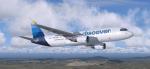
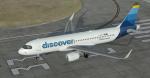
FSX/P3D Airbus A320-200 Discover Airlines package
(Category: FSX > Civil Jets)
84.70Mb (107 downloads)
FSX/P3D Airbus A320-200 Discover Airlines package. Discover part of the Lufthansa Group and is the new name for the former Eurowings Discover, a German long haul leisure airline based out of Frankfurt and Munich. Discover currently operates 16 A320-200 and flies worlwide.
Model by Project Airbus. 2020 updated VC by Speedbird77 with built in FMC by Garret Smith. Includes A320 operation manual and checklist. Airbus sounds included. Textured, assembled for P3D v5.3 by Chris Evans. Should work in FSX and other P3D
Posted Apr 29, 2026 18:33 by chris evans
FSX/P3D Airbus A320-200 Iberojet package
(Category: FSX > Civil Jets)
83.95Mb (118 downloads)
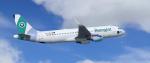
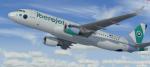
FSX/P3D Airbus A320-200 Iberojet package. Iberojet is a Spanish/Portuguese charter airline based out of Madrid and Lisbon, operating flights around the world.
Model by Project Airbus. 2020 updated VC by Speedbird77 with built in FMC by Garret Smith. Includes A320 operation manual and checklist. Airbus sounds included. Textured, assembled for P3D v5.3 by Chris Evans. Should work in FSX and other P3D
Posted Apr 28, 2026 18:57 by chris evans
FSX/P3D Boeing C-17 Globemaster III Package
(Category: FSX > Military)
34.04Mb (405 downloads)
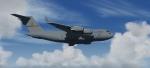
FSX/P3D Boeing C-17 Globemaster III USAF, RAF and Armée de l'Air (French Air Force).
This is the Boeing C17 originally by Gmax Academy converted to FSX native format and compatible with FSX and P3D v4+
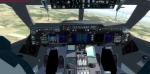
Added the A400M internal VC by Patrick Le Luyer which is the nearest I can find to the military cockpit of the C17
Model conversion by Speedbird77.
Packaged for P3D/FSX by Chris Evans.
Posted Apr 25, 2026 10:56 by chris evans
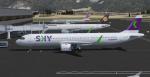
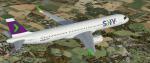
FSX/P3D Airbus A321NEO Sky Airline package
(Category: FSX > Civil Jets)
89.26Mb (146 downloads)
FSX/P3D Airbus A321NEO Sky Airline package. Based at Santiago, Chile, Sky Airline currently operates 7 Airbus A321neo and flies to destinations around north and sounth America.
Model by Project Airbus with NEO engine mod by Bret Herman. Updated VC by Speedbird77 with built in FMC by Garret Smith. Includes A320 operation manual and checklist. PW sounds included. Textured, assembled for P3D v5.4 by Chris Evans. Should work in FSX and other P3D
Posted Apr 24, 2026 11:00 by chris evans