



All Files > Page 1
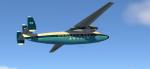
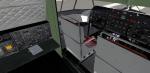
Airspeed Ambassador Mk2 for FSX and P3D
(Category: FSX > Props)
67.98Mb (48 downloads)
Airspeed Ambassador Mk2 for FSX and P3D.
The Airspeed AS.57 Ambassador Mk 2 is a British twin-engine, piston-powered short-to-medium-haul airliner designed and built by Airspeed Ltd. The sole surviving example (registered G-ALZO) is preserved at the Imperial War Museum Duxford as part of the Duxford Aviation Society's British Airliner Collection
Model by Rob Richardson.
See Info.txt
Posted Oct 26, 2026 16:06 by admin
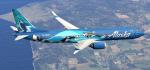
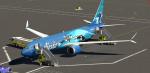
P3D/FSX Boeing 737-Max 9 Alaska West Coast Wonders Orca
(Category: FSX > Civil Jets)
90.12Mb (58 downloads)
P3D/FSX Boeing 737-Max 9 Alaska West Coast Wonders Orca. Alaska Airlines 'West Coast Wonders' is a special livery Boeing 737-9 MAX (registration N932AK) that features a Southern Resident orca whale design.
Promotes ocean conservation, plastic waste reduction, and habitat restoration in partnership with the Bonneville Environmental Foundation and Promise the Pod.
Alaska currently operate 80 Boeing 737 Max 9.
The high spec Boeing 737-9 Max from TDS. The VC is the Microsoft/Alejandro Rojas Lucena/FSND base modified by Speedbird77 to resemble a Max cockpit, including gauges by G. Munro.
There are custom CFM eco sounds included for that extra realism. Use - Instrument panel - Util for ground vehicles, doors stairs, fuel truck, buses. New Utility allows Bus, fuel, doors and more. (Go to Views - Instrument panel - Utility). VC added and edited to allow correct VC views, correct jetways and wheel levels. Credits go to high quality TDS FSX native Boeing Max 9 model and paint kit. I added PDF Boeing 737 checklist.
Textured, packaged and prepared for P3D v6 by Chris Evans. Should also work in FSX and other P3D versions.
Posted Oct 26, 2026 15:07 by chris evans


FSX/P3D Airbus A320-200 Thai Airasia 'Move' Colours package
(Category: FSX > Civil Jets)
87.19Mb (70 downloads)
FSX/P3D Airbus A320-200 Thai Airasia 'Move' Colours package. This airline is headquartered in Bangkok, Thailand. Its primary operational hub is Don Mueang International Airport (DMK), with secondary bases located at Suvarnabhumi Airport (BKK), Phuket International Airport (HKT), and Chiang Mai International Airport (CNX). Thai Air Asia currently operates 44 A320-200.
Model by Project Airbus. 2020 updated VC by Speedbird77 with built in FMC by Garret Smith. Includes A320 operation manual and checklist. Airbus sounds included. Textured, assembled for P3D v6 by Chris Evans. Should work in FSX and other P3D
Posted Oct 25, 2026 18:09 by chris evans
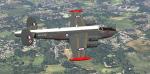
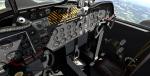
Avro Shackleton MR3 for FSX and P3D.
(Category: FSX > Vintage)
57.94Mb (231 downloads)
Avro Shackleton MR3 for FSX and P3D.
The Shackleton is British long range maritime patrol aircraft.
The aircraft is widely remembered for its long-endurance missions—often exceeding 15 to 18 hours—and the distinct acoustic profile of its four Rolls-Royce Griffon engines, driving contra-rotating propellers, which earned it the legendary nickname "The Growler"
The MR3 variant departed significantly from the design of its bomber ancestors (the Lancaster and Lincoln) through several defining modifications:
Tricycle Undercarriage: Swapped the traditional tail-wheel design of earlier marks for a tricycle landing gear configuration with dual wheels to handle increased operating weights. Crew comfort. Redesigned wings. Turbojet engine thrusts.
Model by Rob Richardson.
See Info.txt
Posted Oct 24, 2026 16:29 by admin
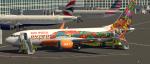
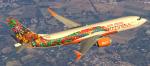
P3D/FSX Boeing 737 Max 8 Air India Express 'Flying Canvas' colours
(Category: FSX > Civil Jets)
92.27Mb (96 downloads)
P3D/FSX Boeing 737 Max 8 Air India Express 'Flying Canvas' colours. Air India Express launched The Flying Canvas in March 2026, marking India's first full-fuselage art wrapped aircraft.
Air India Express is a low cost division of Air India with it's main hubs at Bengaluru, Delhi, and Mumbai. Currently Air India Express operate 53 Boeing 737 Max 8 with another 167 Boeing Max on order.
The high spec Boeing 737-Max 8 from TDS. The VC is the Microsoft/Alejandro Rojas Lucena/FSND base modified by Speedbird77 to resemble a Max cockpit, including gauges by G. Munro.
There are custom CFM eco sounds included for that extra realism. Use - Instrument panel - Util for ground vehicles, doors stairs, fuel truck, buses. New Utility allows Bus, fuel, doors and more. (Go to Views - Instrument panel - Utility). VC added and edited to allow correct VC views, correct jetways and wheel levels. Credits go to TDS fantastic native FSX Boeing Max8 model. I added PDF B737 checklist.
Textured, packaged and prepared for P3Dv6 by Chris Evans. Should also work on other P3D and FSX
Posted Oct 24, 2026 09:24 by chris evans
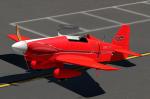
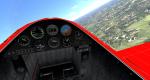
LeVier (Lockheed) Cosmic Wind for FSX and P3D
(Category: FSX > Props)
24.35Mb (109 downloads)
LeVier (Lockheed) Cosmic Wind for FSX and P3D.
The LeVier Cosmic Wind is a tiny, single-seat, all-metal Formula 1 racing aircraft designed in 1947 by Lockheed's chief test pilot, Tony LeVier, alongside a small team of Lockheed engineers. Originally built to compete in the post-WWII Goodyear Trophy races, the aircraft is legendary in aviation history for its extreme efficiency, outstanding handling, and exceptional power-to-weight ratio.
Model by Rob Richardson.
See Info.txt
Posted Oct 23, 2026 10:06 by admin

FSX/FS2004 Shorts SC-7 Skyvan 3 G-ASZJ
(Category: FSX > Props)
17.53Mb (133 downloads)
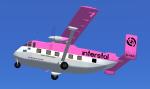
MSN SH.1831 was built in 1964 as a Series 2 Skyvan and registered as G-ASZJ. Converted to a Series 3 with Garrett engines, Zulu Juliet was painted in a pseudo Northeast Airlines colour scheme and leant out to British Air Services as a potential de Havilland Heron replacement. Converted to a passenger configuration, it was repainted in an interesting lilac and grey scheme with Interstol titling and demonstrated to a variety of airlines as a feeder liner. BEA Scottish division did use ‘SZJ but had it painted, yet again, in their colours. After return to Shorts, it assumed a red and white scheme and went out on loan to various operators. Its final time on the UK register, in an all white scheme, it served Trygon between 1991 and 1995. It then went on to become, in turn 9U-BHJ, ZS-ORN,3D-AER, 9Q-CSO, 9Q-CSD, and finally to Win Win Aviation as N198WW in 2019.
Painted on to the Dan Watkins/Ken Mitchell/ Aaron Swindle (with help from Rick Piper) Shorts Skyvan, I have attempted to recreate the initial Northeast yellow and grey scheme, and the lilac and grey Interstol scheme, worn by G-ASZJ. I apologise for the bleed-through on one of the struts but this was done just for fun!
Posted Oct 22, 2026 12:45 by Steve Morley
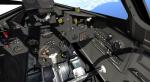
Armstrong Whitworth Meteor NF11 for FSX and P3D
(Category: FSX > Military)
29.87Mb (144 downloads)
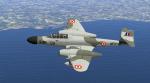
Armstrong Whitworth Meteor NF11.
The Armstrong Whitworth Meteor NF.11 is a 1950s British two-seat, twin-engine jet night fighter developed as a specialized radar-equipped variant of the Gloster Meteor.
To house its heavy AI Mk.10 radar and a second crew member (radar operator), the aircraft featured a significantly lengthened nose and a stretched fuselage based on the Meteor trainer variant. Because the radar occupied the nose, its four 20mm Hispano cannons were moved into the wings. It served as a vital interim night fighter for the Royal Air Force and several European allies during the early years of the Cold War before being replaced by more advanced all-weather interceptors.
Model by Rob Richardson.
See Info.txt
Posted Oct 22, 2026 09:33 by admin
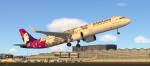
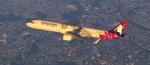
P3D/FSX Airbus A321Neo Hawaiian Airlines
(Category: FSX > Civil Jets)
100.73Mb (170 downloads)
P3D/FSX Airbus A321Neo Hawaiian Airlines. Hawaiian are based at Honolulu International Airporta and are part of Alaska Airlines Group. Currently Hawaiian operate 18 Airbus A321 neo flying to destinations around the USA and Asia.
Model by Project Airbus with NEO engine mod by Bret Herman. Updated VC by Speedbird77 with built in FMC by Garret Smith. Includes A320 operation manual and checklist. CFM NEO sounds included. Textured, assembled for P3D v6 by Chris Evans. Should work in FSX and other P3D
Posted Oct 21, 2026 17:23 by chris evans
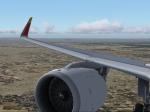
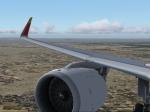
Fix for FS2004 Project Airbus A320Neo external view
(Category: FS2004 > Civil Jets)
5.35Mb (63 downloads)
A fix for the FS2004 Project Airbus A320Neo_CFM.mdl (Model for FSX/P3D converted for FS2004 using MCX.), which the engine cones and the landing gear in the external view.
Posted Oct 21, 2026 17:04 by Ivano Marongiu