



All Time Popular > Page 5511
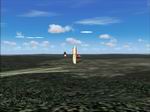
FS2002/2004 Harris Hill, Elmira, NY, Soaring Scenery.
(Category: FS2004 > Gliders and Ultralites)
0.12Mb (55 downloads)
FS2002/2004
Harris Hill, Elmira, NY, Soaring Scenery. This
file adds some thermals to default Microsoft scenery for Harris
Hill (4N48) Region, New York, USA Good flights and landings
By Francisco Vargas. 120K
Posted Jun 23, 2008 14:18 by archive
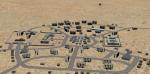
Fort Irwin National Training Center, California
(Category: FSX > Scenery)
212.35Mb (54 downloads)
This file is a rough depiction of the US Army's National Training Center (NTC) at Fort Irwin in California. I have modelled the various towns and airfields in the "Box", as well as an Armored Brigade Combat Team (ABCT) as the RTU and the 11th Armored Cavalry Regiment (ACR) as OPFOR. Please see the README.txt file for full details.
Posted Nov 1, 2026 19:12 by Ed Knapton
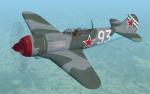
Lavochkin La-5FN
(Category: CFS2 > Aircraft)
20.20Mb (54 downloads)
Lavochkin La-5FN
Unit: 32 GIAP aircraft flight files,
Pilot: Captain Vladimir Orekhov -- He ended the war with 19 personal victories
The La-5FN's story begins with one of the most remarkable engineering rescues of the war. In 1942, Semyon Lavochkin's LaGG-3 fighter, nicknamed the "lacquered guaranteed coffin" by its pilots, was one of the worst Soviet fighters in service. Underpowered, heavy, and sluggish, the LaGG-3 was being slaughtered by Bf 109s. Lavochkin's design bureau faced closure. In a desperate gamble, he replaced the LaGG-3's inline Klimov engine with the available Shvetsov M-82 radial engine, creating the LaG-5 (soon redesignated La-5) almost overnight.
The La-5 was a massive improvement over the LaGG-3, but it still had significant problems. The carbureted M-82A engine was unreliable and difficult to maintain. The breakthrough came with the ASh-82FN engine. The combination of the FN engine with Lavochkin's refined airframe produced the La-5FN, which entered production in March 1943.
The La-5FN was superior to the Bf 109G-2 in speed below 20,000 feet, in rate of climb below 16,000 feet, and in horizontal maneuverability at all altitudes. For the first time since the German invasion, a Soviet fighter could claim genuine qualitative parity with the best Luftwaffe equipment.
Credits
Captain Kurt: Aircraft model, VC, 2D panel. paint textures, and .dp
aircraft flight files: Thicko
Kelticheart: Prop blurred texture
Gauges: Most are by Morton for the Br Yak-9U others by authors unknown
Bombs, rockets, and racks are from Ivan Hsu's I-16 series
Posted Oct 8, 2026 00:59 by Captain Kurt

Project Airbus A380 Multiplayer Model set
(Category: FSX > Civil Jets)
4.07Mb (54 downloads)
This is the Thomas Ruth/Project Airbus Airbus A380 multiplayer compatible model set. Bugs fixed. By Thomas Ruth
Required files:
required file
Posted Sep 13, 2026 22:19 by Toby Boult
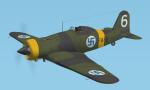
Fiat G.50 Series I Finland
(Category: CFS2 > Aircraft)
3.50Mb (54 downloads)
Fiat G.50 Series I Finland
Unit: 1/LeLv26 Kilpasilta, Finland Mar 1943 (this aircraft had 5 victories with various pilots)
Pilot: L. Kalkkinen
The FIAT G.50 Freccia (Freccia means Arrow in English) was first flown in February 1937. The G.50 was Italy's first single-seat, all-metal monoplane with an enclosed cockpit and retractable landing gear to go into production. Italian pilots disliked the sliding cockpit canopy, which was not easy to open quickly. So, in later production series, an open cockpit was adopted.
Fourteen G.50 were drawn from the first Series I production batch and shipped to Finland in January of 1940. They were assigned to LeLV 26, then stationed at Utti, but the unit was still in training when the so called Winter War with Russia ended with a peace treaty in March 1940. The enclosed cockpit canopies perspex began yellowing and fogging leading to the removal of the sliding canopies and painting over the fixed rear canopies.
Twenty one more G.50s were delivered during 1940 (two lost in transit), this time from the Series II version. Finland declared war on the Soviet Union on June 25, 1941 after the Russians bombed several Finland cities. With LeLv26, The G.50 saw its longest and most successful service in the two Finnish wars against the Soviet Union, the Winter War of 1939 1940 and the Continuation War of 1941 1944. Overall, LeLv 26 achieved 52 kills against only 2 losses in combat.
Credits
Captain Kurt: Aircraft model, VC, paint textures, aircraft flight files, and .dp
Kelticheart: Prop blurred texture
Gauges, as far as I know, credit goes to kelticheart, mvg3d, Chalachew, Beepee, and Gius for their WWII Italian gauges.
The panel, much modified, is based on an IL-2 panel.
Posted Jan 7, 2026 04:53 by Captain Kurt

Bf109G-10 2.JG300
(Category: CFS2 > Aircraft)
12.45Mb (54 downloads)
Messerschmitt Bf109G-10 Erla built
by Design Team Daedalus
Unit: 2./JG300 Borkheide, Germany early 1945
Pilot: Uffz. Hans Dahmen
The Bf109G-10 was an attempt by the RLM to standardize the Bf109 sub-types using the new DB 605D engine fitted with MW-50 (methanol water 50/50 mix) boost giving an increase to 1775hp.
However this attempt was a massive failure and there is no "standard" Bf 109G-10. The only consistent features were the use of the "Erla Haube" canopy and a version of the DB 605D engine requiring a streamlined cowling to cover the larger engine configuration.
The Erla factory used a completely different engine cowling type with the port side featuring a rectangular fairing behind the engine and an ellipse shape on the starboard side. The WNF and Regensburg plants used an ellipse shape on both sides and had small chin bulges. Regensburg production seems to have been mostly conversions of existing G6 and G-14 airframes.
Most used larger main wheels which required the larger rectangular shaped upper wing fairings, but some used the smaller wheels with the smaller teardrop shaped upper wing fairings. While all had the tall horizontal tail type, they used different rudder types. Different types of oil coolers, tail wheel struts, antenna masts, etc. from subcontractors were available at different times during the production runs.
Armament was different too. Most WNF built G-10s were the G-10/U4 subtype using a 30mm cannon in the nose rather than the 20mm used in the Erla and Regensburg built models.
Given the many different features that existed on individual G-10 aircraft, each model we have created has its own unique features.
Pstrany began the development of the models using Paul Rebuffat's Messerschmitt model - with permission - as a starting framework and updated the shape, and added a plethora of details, new parts, and ideas. Pstrany also developed the models for the drop tanks, weapons and racks.
Captain Kurt created paints for each, the 2D instrument panel, the .dp files, the air files and the aircraft.cfg files.
Mav SCASM edited each model so that they have animated wing slats, drop tanks, and other features, as well as optimizing models for the best possible frame rates. Mav also developed the idea for the 2d panel to be offset for the Revi gun sight to match the CFS2 reticle.
Posted Oct 4, 2025 17:36 by Design Team Daedalus


FSX/FS2004 iFly Nordwind Airlines Textures
(Category: FSX > Payware)
15.51Mb (54 downloads)
FS9/FSX iFly Jets Boeing 737-800 in Nordwind Airlines livery. Repaint by Sergey Gleba aka serg09. Paint Kit by Denis Minaev. Link to my products on SimMarket: http://secure.simmarket.com/paintsim.mhtml
Posted Oct 22, 2022 13:51 by Sergey Gleba aka serg09

FS2002/2004 Midlothian, Texas Thermals Scenery
(Category: FS2004 > Gliders and Ultralites)
0.05Mb (54 downloads)
FS2002/2004
Midlothian, Texas Thermals Scenery
This file adds some thermals and asphalt runway to default
Microsoft scenery for Midlothian,Forth Worth, Texas Region
,USA, home of Texas Soaring Association and are located at
TSA Airfield(TX11) Good Flights and better landings By Francisco
Vargas. 63K
Posted Jun 23, 2008 14:18 by archive


P3D4+ Embraer EMB 120ER Ameriflight package
(Category: Prepar3d > Props)
109.92Mb (53 downloads)
P3D4+ Embraer EMB 120ER Ameriflight package. Ameriflight is a US cargo airline operating turboprop aircraft throughout the USA as well as Canada and Mexico. Ameriflight currently operate 12 EMB120 aircraft.
Originally designed by Erick Cantu, now available as FSX and P3D native. This release has some fixes, added a new soundpack. FSX/P3D native conversion by George Arana, Brandon Filer. Sounds by
Adam Murphy. Panel/Gauges by Microsoft. Textures by Chris Evans
Posted Jun 23, 2026 17:28 by chris evans
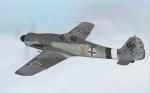
Focke Wulf Fw 190D-9 9JG26
(Category: CFS2 > Aircraft)
10.81Mb (53 downloads)
Focke Wulf Fw 190D-9
by Design Team Daedalus
Unit: 9./JG26 Celle, Germany, March, 1945
Pilot: unknown
The Fw 190D-9 combined the Fw 190A-8 fuselage and wings with the Jumo 213A-1 engine to create a higher altitude capable fighter than the A-8. The first production aircraft were completed at Focke-Wulf’s factory at Sorau in Silesia in late August 1944. Problems with engine meant that the second aircraft wasn’t completed until mid-September, but construction soon sped up. By the end of September production was underway at Focke-Wulf’s factory at Cottbus, and in October work began at Roland (WFG) at Nordenahm and Fieseler at Kassel. Junkers and Siebel produced parts, and Arado was also involved in the program. The total number produced is unclear, with at least 670 known and no records for December 1944 or February 1945 to the end of the war. 1,500 serial numbers are known to have been allocated to the D-9, but that doesn’t mean that all of these aircraft were completed.
The standard D-9 was armed with two 13mm MG 131 machine guns above the engine and two 20mm MG 151 cannon in the wing roots. It could also carry an ETC 501 or ETC 504 stores carriers below the fuselage.
The first D-9 unit, III./JG 54, began to convert to the type in September 1944, and by the end of October had 68 aircraft, of which only one had the MW 50 installed. However 53 had been given a new Junkers kit that increased the manifold pressure in the engine and boosted power from 1,750hp to around 1,870hp.
By the end of December 1944 there were 183 D-9s in service with three units (III./JG 54, II./JG 26 and III./JG 26), with some equipped with both the MW 50 and Junkers kits, some with one or the other and some without either. However new aircraft coming off the production line mainly had both.
Early in 1945 the D-9 was issued to JG 2, JG 3, JG 6, JG 51 and JG 301, although these units normally operated a mix of types. In service the D-9 was considered to be as good as its main opponents, in particular the Merlin powered P-51 Mustangs and the Griffon powered Spitfire Mk.XIV. It handled better than the Fw 190A, was faster and climbed quicker. It could out-turn most Soviet fighters at the normal combat levels, and was quicker in the dive than the Yak-3 or Yak-9.
It was a very good fighter for that time but was too little too late to have any effect on the course of the war.
--------------------------------------------------------------------------------------------------------------------------------------------------------------------
Captain Kurt developed the model from the old Pstrany Dora model - with permission - as a starting framework and updated the shape, and added multiple details, new parts, new VC, and animations. The original Pstrany airfiles, and Dora weapons models for the drop tanks, weapons, and racks are still used as is the Jumo sound package (included)
Captain Kurt also created the camouflage paint, and the 2D instrument panel.
Posted Feb 7, 2026 22:54 by Design Team Daedalus