



All Time Popular > Page 5484
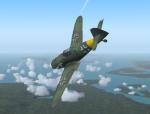
Bf109G-10 5.JG11
(Category: CFS2 > Aircraft)
12.14Mb (41 downloads)
Messerschmitt Bf109G-10 Erla built
by Design Team Daedalus
Unit: 5./JG11 - surrendered at Rechlin-Lärz, Germany May 7, 1945
Pilot: Unknown
The Bf109G-10 was an attempt by the RLM to standardize the Bf109 sub-types using the new DB 605D engine fitted with MW-50 (methanol water 50/50 mix) boost giving an increase to 1775hp.
However this attempt was a massive failure and there is no "standard" Bf 109G-10. The only consistent features were the use of the "Erla Haube" canopy and a version of the DB 605D engine requiring a streamlined cowling to cover the larger engine configuration.
The Erla factory used a completely different engine cowling type with the port side featuring a rectangular fairing behind the engine and an ellipse shape on the starboard side. The WNF and Regensburg plants used an ellipse shape on both sides and had small chin bulges. Regensburg production seems to have been mostly conversions of existing G6 and G-14 airframes.
Most used larger main wheels which required the larger rectangular shaped upper wing fairings, but some used the smaller wheels with the smaller teardrop shaped upper wing fairings. While all had the tall horizontal tail type, they used different rudder types. Different types of oil coolers, tail wheel struts, antenna masts, etc. from subcontractors were available at different times during the production runs.
Armament was different too. Most WNF built G-10s were the G-10/U4 subtype using a 30mm cannon in the nose rather than the 20mm used in the Erla and Regensburg built models.
Given the many different features that existed on individual G-10 aircraft, each model we have created has its own unique features.
Pstrany began the development of the models using Paul Rebuffat's Messerschmitt model - with permission - as a starting framework and updated the shape, and added a plethora of details, new parts, and ideas. Pstrany also developed the models for the drop tanks, weapons and racks.
Captain Kurt created paints for each, the 2D instrument panel, the .dp files, the air files and the aircraft.cfg files.
Mav SCASM edited each model so that they have animated wing slats, drop tanks, and other features, as well as optimizing models for the best possible frame rates. Mav also developed the idea for the 2d panel to be offset for the Revi gun sight to match the CFS2 reticle.
Posted Oct 4, 2025 17:33 by Design Team Daedalus
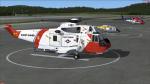
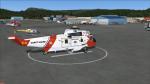
FSX Virtavia Sea King US Coast Guard Textures
(Category: FSX > Payware)
3.70Mb (41 downloads)
THIS IS A FICTICIOUS PAINT OF the payware Virtavia Sea King in US COAST GUARD colors.. It appears that the SH-3H was never used as a US Coast guard rescue aircraft....until now.The HH-3 Pelican and the HH-52A were the standard of the day back then.
Posted Sep 6, 2025 21:09 by Bruce miller
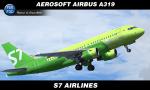
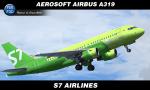
P3D Aerosoft Airbus A319 S7 Airlines Textures
(Category: Prepar3d > Payware)
27.83Mb (41 downloads)
P3D Aerosoft Airbus A319 Professional in S7 Airlines (Citrus) livery. Textures for payware Aerosoft A319 Professional model. Description and instruction in the archive. Repaint by Sergey Gleba. Link to new products on SimMarket: https://secure.simmarket.com/simlivery.mhtml
Required files:
required file
Posted Nov 8, 2023 09:00 by Sergey Gleba aka serg09
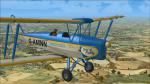
Ant's Tiger Moth Pro G_AMNN Northbrook Textures
(Category: FSX > Payware)
58.59Mb (41 downloads)
Another livery for G-AMNN Northbrook college of aeronautical engineering.
Posted Oct 3, 2022 10:18 by Dave T
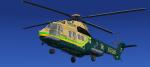
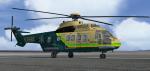
Nemeth Designs AS332 Super Puma LASD Pack
(Category: FSX > Payware)
13.75Mb (40 downloads)
welcome to my Nemeth Designs AS332 Super Puma Los Angeles Sheriff Department paint pack. 4 paints are included, all work with FSX and P3D. N950SG, N950LE, N951LB, N952JH. You will need the Nemeth Designs AS332 payware for these paints to work. Enjoy!
Posted Mar 19, 2026 16:41 by Delta
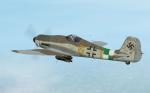
Focke Wulf Fw 190D-9 Ta 152 tail
(Category: CFS2 > Aircraft)
18.01Mb (40 downloads)
Focke Wulf Fw 190D-9 Ta 152 tail
by Design Team Daedalus
Unit: 9./JG(J)27
Pilot: unknown
The Fw 190D-9 combined the Fw 190A-8 fuselage and wings with the Jumo 213A-1 engine to create a higher altitude capable fighter than the A-8. The first production aircraft were completed at Focke-Wulf’s factory at Sorau in Silesia in late August 1944. Problems with engine meant that the second aircraft wasn’t completed until mid-September, but construction soon sped up. By the end of September production was underway at Focke-Wulf’s factory at Cottbus, and in October work began at Roland (WFG) at Nordenahm and Fieseler at Kassel. Junkers and Siebel produced parts, and Arado was also involved in the program. The total number produced is unclear, with at least 670 known and no records for December 1944 or February 1945 to the end of the war. 1,500 serial numbers are known to have been allocated to the D-9, but that doesn’t mean that all of these aircraft were completed.
A few Ta 152 tail surfaces found their way to some Doras apparently through a lack of standard units. These were assembled by subcontractors, and delivered near final assembly. It is very likely it was due to problems in logistics control.
The standard D-9 was armed with two 13mm MG 131 machine guns above the engine and two 20mm MG 151 cannon in the wing roots. It could also carry an ETC 501 or ETC 504 stores carriers below the fuselage.
The first D-9 unit, III./JG 54, began to convert to the type in September 1944, and by the end of October had 68 aircraft, of which only one had the MW 50 installed. However 53 had been given a new Junkers kit that increased the manifold pressure in the engine and boosted power from 1,750hp to around 1,870hp.
By the end of December 1944 there were 183 D-9s in service with three units (III./JG 54, II./JG 26 and III./JG 26), with some equipped with both the MW 50 and Junkers kits, some with one or the other and some without either. However new aircraft coming off the production line mainly had both.
Early in 1945 the D-9 was issued to JG 2, JG 3, JG 6, JG 51 and JG 301, although these units normally operated a mix of types. In service the D-9 was considered to be as good as its main opponents, in particular the Merlin powered P-51 Mustangs and the Griffon powered Spitfire Mk.XIV. It handled better than the Fw 190A, was faster and climbed quicker. It could out-turn most Soviet fighters at the normal combat levels, and was quicker in the dive than the Yak-3 or Yak-9.
It was a very good fighter for that time but was too little too late to have any effect on the course of the war.
--------------------------------------------------------------------------------------------------------------------------------------------------------------------
Captain Kurt developed the model from the old Pstrany Dora model - with permission - as a starting framework and updated the shape, and added multiple details, new parts, new VC, and animations. The original Pstrany airfiles, and Dora weapons models for the drop tanks, weapons, and racks are still used as is the Jumo sound package (included)
Captain Kurt also created the camouflage paint, and the 2D instrument panel.
Posted Feb 7, 2026 22:52 by Design Team Daedalus
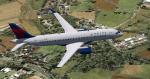
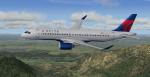
P3D4 + Only Airbus A220-300 Delta package
(Category: Prepar3d > Civil Jets)
78.75Mb (40 downloads)
P3D4 + Only Airbus A220-300 Delta package.
Delta currently operate 45 A220-300.
Original AI model by SBAI.
This is an AI model made flyable with added VC, etc.
Tested on P3Dv5 and will not work in FSX or P3D 1-3. (seperate version available). Textured and assembled by Chris Evans.
Posted Dec 15, 2025 15:58 by chris evans
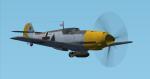
Bf109E-1B_ II.LG2
(Category: CFS2 > Aircraft)
8.41Mb (40 downloads)
Messerschmitt Bf 109E-1/B
by Design Team Daedalus
Unit: II/LG 2 November 30, 1940 Crash landed at Worth Matravers, Dorset, England
Pilot: Uffz. Paul Wacker
To improve on the performance afforded by the 690 hp Jumo 210 of the earlier Bf 109 versions, the larger, longer 1080 hp Daimler-Benz DB 601A engine was used. As a consequence, the nose, cooling system, and wings had to be redesigned resulting in the classic Bf 109E series. In late 1938, the Bf 109E entered production. It entered general service with the Lufwaffe in the spring of 1939. A total of 1,183 E-1 were built, 110 of them were E-1/B fighter bomber versions.
The E-1/B was a small batch of E-1s that became the first operational Bf 109 fighter bomber, or Jagdbomber (usually abbreviated to Jabo). These were fitted with an ETC 500 bomb rack, carrying one 250 kg (550 lb) bomb.
There were many small differences between indivual E-1s because the E-1 was often modified in the field by groundcrew and rear area repair depots. The production standard was lightly armed with two 7.92mm MG17s above the engine and two in the wings and had no pilot armor. Mods included types of pilot head armor,E-4 type squared canopies, E-7 type pointed spinners, etc.
So each model we have created has its own unique features. This aircraft was modified with an E-4 squared canopy, a flat plate pilot head armor and an antenna mounted pennant.
Pstrany is the primary model author with some small model refinement and additions by Captain Kurt as the model was collaborated on during development. Captain Kurt created the textures for each, the 2D instrument panel, the individual .dp files, air files and aircraft.cfg files.
Posted Oct 12, 2025 16:18 by Design Team Daedalus
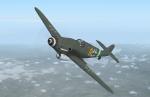
Bf109G-10 9.JG51
(Category: CFS2 > Aircraft)
12.13Mb (40 downloads)
Messerschmitt Bf109G-10 Erla built
by Design Team Daedalus
Unit: 9./JG51 Fels am Wagram, Germany (Austria) May 1945
Pilot: Unknown
The Bf109G-10 was an attempt by the RLM to standardize the Bf109 sub-types using the new DB 605D engine fitted with MW-50 (methanol water 50/50 mix) boost giving an increase to 1775hp.
However this attempt was a massive failure and there is no "standard" Bf 109G-10. The only consistent features were the use of the "Erla Haube" canopy and a version of the DB 605D engine requiring a streamlined cowling to cover the larger engine configuration.
The Erla factory used a completely different engine cowling type with the port side featuring a rectangular fairing behind the engine and an ellipse shape on the starboard side. The WNF and Regensburg plants used an ellipse shape on both sides and had small chin bulges. Regensburg production seems to have been mostly conversions of existing G6 and G-14 airframes.
Most used larger main wheels which required the larger rectangular shaped upper wing fairings, but some used the smaller wheels with the smaller teardrop shaped upper wing fairings. While all had the tall horizontal tail type, they used different rudder types. Different types of oil coolers, tail wheel struts, antenna masts, etc. from subcontractors were available at different times during the production runs.
Armament was different too. Most WNF built G-10s were the G-10/U4 subtype using a 30mm cannon in the nose rather than the 20mm used in the Erla and Regensburg built models.
Given the many different features that existed on individual G-10 aircraft, each model we have created has its own unique features.
Pstrany began the development of the models using Paul Rebuffat's Messerschmitt model - with permission - as a starting framework and updated the shape, and added a plethora of details, new parts, and ideas. Pstrany also developed the models for the drop tanks, weapons and racks.
Captain Kurt created paints for each, the 2D instrument panel, the .dp files, the air files and the aircraft.cfg files.
Mav SCASM edited each model so that they have animated wing slats, drop tanks, and other features, as well as optimizing models for the best possible frame rates. Mav also developed the idea for the 2d panel to be offset for the Revi gun sight to match the CFS2 reticle.
Posted Oct 4, 2025 17:32 by Design Team Daedalus
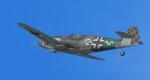
Bf109G10 13.JG27
(Category: CFS2 > Aircraft)
12.39Mb (40 downloads)
Messerschmitt Bf109G-10 Regensburg built
by Design Team Daedalus
Unit: IV./JG27 - probably at Achmer, Germany Spring, 1945
Pilot: Unknown
The Bf109G-10 was an attempt by the RLM to standardize the Bf109 sub-types using the new DB 605D engine fitted with MW-50 (methanol water 50/50 mix) boost giving an increase to 1775hp.
However this attempt was a massive failure and there is no "standard" Bf 109G-10. The only consistent features were the use of the "Erla Haube" canopy and a version of the DB 605D engine requiring a streamlined cowling to cover the larger engine configuration.
The Erla factory used a completely different engine cowling type with the port side featuring a rectangular fairing behind the engine and an ellipse shape on the starboard side. The WNF and Regensburg plants used an ellipse shape on both sides and had small chin bulges. Regensburg production seems to have been mostly conversions of existing G6 and G-14 airframes.
Most used larger main wheels which required the larger rectangular shaped upper wing fairings, but some used the smaller wheels with the smaller teardrop shaped upper wing fairings. While all had the tall horizontal tail type, they used different rudder types. Different types of oil coolers, tail wheel struts, antenna masts, etc. from subcontractors were available at different times during the production runs.
Armament was different too. Most WNF built G-10s were the G-10/U4 subtype using a 30mm cannon in the nose rather than the 20mm used in the Erla and Regensburg built models.
Given the many different features that existed on individual G-10 aircraft, each model we have created has its own unique features.
Pstrany began the development of the models using Paul Rebuffat's Messerschmitt model - with permission - as a starting framework and updated the shape, and added a plethora of details, new parts, and ideas. Pstrany also developed the models for the drop tanks, weapons and racks.
Captain Kurt created paints for each, the 2D instrument panel, the .dp files, the air files and the aircraft.cfg files.
Mav SCASM edited each model so that they have animated wing slats, drop tanks, and other features, as well as optimizing models for the best possible frame rates. Mav also developed the idea for the 2d panel to be offset for the Revi gun sight to match the CFS2 reticle.
Posted Oct 4, 2025 17:30 by Design Team Daedalus