



All Time Popular > Page 5481
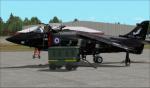
Wilco Harrier FRS1 Black textures
(Category: FSX > Payware)
2.43Mb (45 downloads)
A fictional repaint of the Wilco Harrier FRS1 in Black. This is a tribute to this beautiful aircraft and the people that operated them.
Posted Jun 29, 2022 07:22 by W Visagie
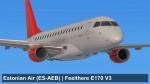
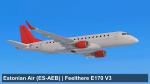
Feelthere Embraer 170 Estonian Air (ES-AEB) Textures
(Category: Prepar3d > Payware)
48.58Mb (45 downloads)
Estonian Air Embraer 170 textures for FeelThere Embraer 170 V3 (payware)
Posted Jun 29, 2022 06:33 by Sebastian Gutmann
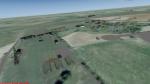
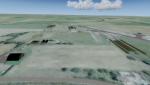
RAF Burn
(Category: Prepar3d > Scenery)
0.18Mb (45 downloads)
The Station opened in 1942 before closing in 1946, it hosted No. 431 Squadron, Royal Canadian Air Force as part of 4 Group RAF Bomber Command which formed at the airfield on 13
November 1942 flying Vickers Wellington Mark X aircraft while at Burn. On 15 July 1943 the squadron was transferred to RAF Tholthorpe and became part of No. 6 Group RCAF.
On 1 January 1944 No. 658 Squadron RAF moved to the airfield from RAF Clifton flying the Taylorcraft Auster III but left only seven days moving to RAF Doncaster but on 21 January
1944 the squadron returned, this time staying until 14 March 1944 when they moved to RAF Collyweston. The squadron was briefly joined on 31 December 1943 by 659 Squadron which
moved to RAF Clifton the following day.
During its use the airfield was also used by No. 10 Aircrew Holding Unit RAF.
On 6 January 1944 No. 578 Squadron RAF squadron was relocated to RAF Burn from RAF Snaith. This Bomber Command squadron flew Handley Page Halifax Mk. III before disbanding on 15
April 1945 and the station was closed for flying operations in July 1945.
On the night of 30 March 1944, Pilot Officer Cyril Joe Barton took off from RAF Burn in Halifax LK797 for a raid on Nuremberg, and won a posthumous Victoria Cross for valour.
Shortly after flying was discontinued, the Royal Army Service Corps took over some facilities to store surplus equipment. ] Many of the buildings have been dismantled but all
three runways remain intact and are used by Burn Gliding Club Ltd.
Posted Mar 26, 2017 13:43 by Terry Boissel
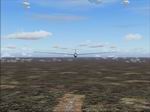
FS2002/2004 Mafikeng,South Africa Soaring Scenery
(Category: FS2004 > Gliders and Ultralites)
0.07Mb (45 downloads)
FS2002/2004
Mafikeng,South Africa Soaring Scenery This
file add some thermals to default Microsoft Mafikeng, South
Africa Airport(ICAO - FAMM) Scenery , home of Aeroclub of
South Africa It is freeware. By Francisco Vargas. 70K
Posted Jun 23, 2008 14:18 by archive
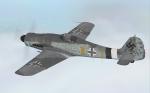
Focke Wulf Fw 190D-9 9JG26
(Category: CFS2 > Aircraft)
10.81Mb (44 downloads)
Focke Wulf Fw 190D-9
by Design Team Daedalus
Unit: 9./JG26 Celle, Germany, March, 1945
Pilot: unknown
The Fw 190D-9 combined the Fw 190A-8 fuselage and wings with the Jumo 213A-1 engine to create a higher altitude capable fighter than the A-8. The first production aircraft were completed at Focke-Wulf’s factory at Sorau in Silesia in late August 1944. Problems with engine meant that the second aircraft wasn’t completed until mid-September, but construction soon sped up. By the end of September production was underway at Focke-Wulf’s factory at Cottbus, and in October work began at Roland (WFG) at Nordenahm and Fieseler at Kassel. Junkers and Siebel produced parts, and Arado was also involved in the program. The total number produced is unclear, with at least 670 known and no records for December 1944 or February 1945 to the end of the war. 1,500 serial numbers are known to have been allocated to the D-9, but that doesn’t mean that all of these aircraft were completed.
The standard D-9 was armed with two 13mm MG 131 machine guns above the engine and two 20mm MG 151 cannon in the wing roots. It could also carry an ETC 501 or ETC 504 stores carriers below the fuselage.
The first D-9 unit, III./JG 54, began to convert to the type in September 1944, and by the end of October had 68 aircraft, of which only one had the MW 50 installed. However 53 had been given a new Junkers kit that increased the manifold pressure in the engine and boosted power from 1,750hp to around 1,870hp.
By the end of December 1944 there were 183 D-9s in service with three units (III./JG 54, II./JG 26 and III./JG 26), with some equipped with both the MW 50 and Junkers kits, some with one or the other and some without either. However new aircraft coming off the production line mainly had both.
Early in 1945 the D-9 was issued to JG 2, JG 3, JG 6, JG 51 and JG 301, although these units normally operated a mix of types. In service the D-9 was considered to be as good as its main opponents, in particular the Merlin powered P-51 Mustangs and the Griffon powered Spitfire Mk.XIV. It handled better than the Fw 190A, was faster and climbed quicker. It could out-turn most Soviet fighters at the normal combat levels, and was quicker in the dive than the Yak-3 or Yak-9.
It was a very good fighter for that time but was too little too late to have any effect on the course of the war.
--------------------------------------------------------------------------------------------------------------------------------------------------------------------
Captain Kurt developed the model from the old Pstrany Dora model - with permission - as a starting framework and updated the shape, and added multiple details, new parts, new VC, and animations. The original Pstrany airfiles, and Dora weapons models for the drop tanks, weapons, and racks are still used as is the Jumo sound package (included)
Captain Kurt also created the camouflage paint, and the 2D instrument panel.
Posted Feb 7, 2026 22:54 by Design Team Daedalus
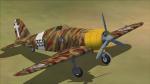
Fiat G.50 bis
(Category: CFS2 > Aircraft)
3.70Mb (44 downloads)
Fiat G.50 bis
Unit: 352 Squadriglia, 20 Gruppo at Pantelleria 1941 - later transferred to Libya
The FIAT G.50 Freccia (Freccia means Arrow in English) was first flown in February 1937. The G.50 was Italy's first single-seat, all-metal monoplane with an enclosed cockpit and retractable landing gear to go into production. Pilots disliked the sliding cockpit canopy, which was not easy to open quickly. So, in later production series, an open cockpit was adopted.
It was employed in all the Regia Aeronautica area operations in the Mediterranean and North Africa for fighter defense, convoy escort and bomber escort missions. In the Greek campaign, it performed adequately against opposing obsolescent types like the Gladiator and Blenheim. After that it was clear it was not a match for more modern Allied aircraft and was eventually used more for ground attack.
Credits
Captain Kurt: Aircraft model, VC, paint textures, aircraft flight files, and .dp
Kelticheart: Prop blurred texture
Gauges, as far as I know, credit goes to kelticheart, mvg3d, Chalachew, Beepee, and Gius for their WWII Italian gauges.
The panel, much modified, is based on an IL-2 panel.
Posted Jan 7, 2026 04:52 by Captain Kurt
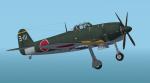
Kawanishi N1K2-Ja Shiden Kai
(Category: CFS2 > Aircraft)
3.98Mb (44 downloads)
Unit: Yokosuka Kokutai, Yokosuka Airfield, Japan April 1945
Pilot: unknown
The N1K2-Ja Shiden Kai (Japanese for "Violet Lightning") was the best fighter used in significant numbers by the Japanese Navy during World War II. Known by the Allies as the "George," this maneuverable, heavily-armed fighter was a formidable opponent in the closing months of the war.
The Shiden Kai was considerably better than the Japanese Navy's most common fighter, the A6M Zero. With a top speed of 369 mph, the N1K2a was about 20 mph faster than the A6M Zero. It had CO2 fire suppression systems in the fuel tanks so it did not burn easily like other Japanese fighters did. The N1K2-Ja was a further development of the N1K2-J, which incorporated 4 bomb shackles in the wing and a reduced horizontal tail span. The heavier Shiden Kai also possessed surprisingly good maneuverability due to a mercury switch that automatically extended the flaps during turns. These "combat" flaps created more lift, thereby allowing tighter turns. Moreover, its four 20 mm automatic cannon provided greatly increased firepower than earlier Japanese designs. Unlike the A6M Zero, the Shiden Kai could compete against the best late-war U.S. Navy and U.S. Army Air Forces fighters. It first entered combat early in 1945, and over 400 were produced before the war ended (200 of the N1K2-J and 200 of the N1K2-Ja).
Credits
Captain Kurt: Aircraft model, VC, paint textures, drop tank, and .dp
Wolfi: Crew figure
Gauges by: ACWai, Wolfi and Microsoft
Prop spinning disc texture by:Kelticheart
Bombs by: Allen
Flight files: Microsoft stock with modifications.
Sound: Microsoft stock
Posted Dec 15, 2025 16:59 by Captain Kurt
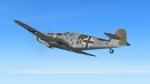
Bf109G10_U4
(Category: CFS2 > Aircraft)
12.25Mb (44 downloads)
Messerschmitt Bf109G-10/U4 WNF built
by Design Team Daedalus
Unit: Unknown - abandoned Prien, Germany 1945
Pilot: Unknown
The Bf109G-10 was an attempt by the RLM to standardize the Bf109 sub-types using the new DB 605D engine fitted with MW-50 (methanol water 50/50 mix) boost giving an increase to 1775hp.
However this attempt was a massive failure and there is no "standard" Bf 109G-10. The only consistent features were the use of the "Erla Haube" canopy and a version of the DB 605D engine requiring a streamlined cowling to cover the larger engine configuration.
The Erla factory used a completely different engine cowling type with the port side featuring a rectangular fairing behind the engine and an ellipse shape on the starboard side. The WNF and Regensburg plants used an ellipse shape on both sides and had small chin bulges. Regensburg production seems to have been mostly conversions of existing G6 and G-14 airframes.
Most used larger main wheels which required the larger rectangular shaped upper wing fairings, but some used the smaller wheels with the smaller teardrop shaped upper wing fairings. While all had the tall horizontal tail type, they used different rudder types. Different types of oil coolers, tail wheel struts, antenna masts, etc. from subcontractors were available at different times during the production runs.
Armament was different too. The WNF built G-10s were the G-10/U4 subtype using a 30mm cannon in the nose rather than the 20mm used in the Erla and Regensburg built models.
Given the many different features that existed on individual G-10 aircraft, each model we have created has its own unique features.
Pstrany began the development of the models using Paul Rebuffat's Messerschmitt model - with permission - as a starting framework and updated the shape, and added a plethora of details, new parts, and ideas. Pstrany also developed the models for the drop tanks, weapons and racks.
Captain Kurt created paints for each, the 2D instrument panel, the .dp files, the air files and the aircraft.cfg files.
Mav SCASM edited each model so that they have animated wing slats, drop tanks, and other features, as well as optimizing models for the best possible frame rates. Mav also developed the idea for the 2d panel to be offset for the Revi gun sight to match the CFS2 reticle.
Posted Oct 5, 2025 14:43 by Design Team Daedalus
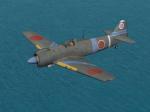
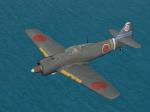
AW Ki-100-I TEXTURE SET 2
(Category: CFS2 > Misc)
11.30Mb (44 downloads)
Texture file: painted by UncleTgt
This is a copyrighted freeware program.Use this program at you own risks, the
author is not responsible for any damages done to your computer.
Thanks for downloading this aircraft, have fun!
Andrew Wai
Required files:
required file
Posted Aug 19, 2024 04:57 by Andrew
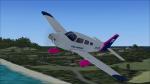
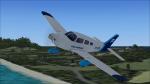
Flying Club Archer Icelandair Textures
(Category: FSX > Payware)
17.54Mb (44 downloads)
All five Icelandair liveries textures for the payware Just Flight Flying Club Archer. By Dbob.
Required files:
required file
Posted May 17, 2024 06:17 by Dbob