



All Time Popular > Page 5477
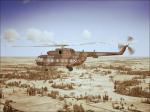
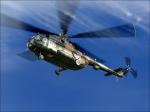
Nemeth Mi17 Polish Air Force textures
(Category: FSX > Payware)
27.67Mb (50 downloads)
Nemeth Designs Mi17 Polish Air Force super pack. Textures only by design Voiteh.
Posted Jan 7, 2023 10:37 by Voiteh
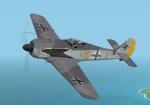
Focke Wulf Fw 190A-3 9JG2
(Category: CFS2 > Aircraft)
3.46Mb (49 downloads)
Focke Wulf Fw 190A-3
Unit: 9./JG2, Poix, France in the fall of 1942
Pilots: Ofw. Fritz Hartmann and Ltn. Heribert Hufnagl
This aircraft had the outer two wing cannons removed.
The Fw 190 series entered combat with the A-1 model in September 1941 proving a huge shock to the RAF as it was clearly superior to the Spitfire V (which was the primary RAF fighter at the time) in everything except turning radius. However these early versions suffered from severe engine overheating problems and fires which kept serviceability rates low throughout 1941. This was somewhat solved in the field by JG26 technical officers by rerouting the exhaust pipes and opening cooling slots in the fuselage aft of the engine. These changes were introduced into the production line for the following A-2 models which began arriving in December 1941.
The Fw 190 A-3 began deliveries in the spring of 1942 with the change to the more powerful BMW 801D-2 1700hp engine using 96 octane fuel, replacing the unreliable BMW 801C-1 in the Fw190 A-2. Fw 190A-3 was externally identical to the A-2, which makes the two variants extremely difficult to tell apart. The only positive visual clues could only be seen up-close: the C3 fuel triangles and the Werknummer. Like the A-2, it had two cowl mounted MG 17 machine guns, two inboard wing mounted MG 151 20mm cannons with protruding barrels and wing root blisters, plus two MG FF 20mm cannons in outboard positions, with underwing bulges. The slower firing MG FF cannons with its limited 90 rpg were often removed in the field and panel bulges replaced with flat panels.
Besides the difference in the number of wing cannons, the only other major variant was the FW 190A-3/U3 fighter bomber which had an under-fuselage mounted bomb rack ETC 501 for carriage of 500 kg of bombs (1 500 kg, 1 250 kg or 4 50 kg on the ER4 adapter) or an external drop tank of 300 liter capacity for long range fighters. Only the two wing cannons were carried and usually had the retractable small gear cover doors removed which would interfere with the ordinance loads.
By early 1943, 509 A-3s had been built. By mid 1943 it was being relagated to opertional training organizations.
--------------------------------------------------------------------------------------------------------------------------------------------------------------------
Captain Kurt developed the model using some parts of the Design Team Daedalus Fw 190D-9 model, which in turn was developed from the old Pstrany Dora model by Captain Kurt - with permission. The new model added multiple details, new parts, new VC, and animations. The air files are a further development of the Design Team Daedalus FW 190 series.
Captain Kurt also created the camouflage paints, and the 2D instrument panel.
Keticheart: prop blur .bmp
AliCat: o2 Wachter and Sauerstoff guages
FSD: most of the gauges
other gauge authors are unknown
Posted Jan 12, 2026 16:20 by Captain Kurt
Lucariny_and_Draws_Ho-18A_and_C
(Category: CFS2 > Aircraft)
27.09Mb (49 downloads)
There is a previous conversion of the JR (João Ricardo) Lucariny Ho-18AB made by me in 2005. The airfile (one of my earliest work) is a Boeing 737 adaptation and is far from being a realistic affair. We learn a lot in 20 years (and I became a realism freak) and I never stop researching about planes. I found the real Horten Ho-18 was a relatively light and small aircraft, so I did a new airfile from zero in 2020. Since then, I am flying it but only recently I decided to cross the Atlantic with it. After that I remember that exist a Horten Ho-18C model made by Christian Drawz I decided to include it in the package. The models were converted using Ivan Hsu/Allen’s DOSMdlc 2.0. Uncle TGT created a bitmap that turns the crew of the Ho-18C more human. Both panels 2D bitmaps are mine using the Lucariny one as a basis. Weapons are Ground Crew and Luft 46’ creations. I WOULD LOVE TO KNOW WHO ARE THE GAUGES AUTHORS.
Posted Jun 16, 2025 01:54 by Peperez
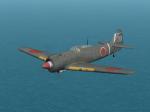
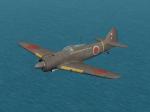
AW Ki-100-I TEXTURE SET 1
(Category: CFS2 > Misc)
10.84Mb (49 downloads)
Texture file: painted by UncleTgt
This is a copyrighted freeware program.Use this program at you own risks, the
author is not responsible for any damages done to your computer.
Thanks for downloading this aircraft, have fun!
Andrew Wai
Required files:
required file
Posted Aug 19, 2024 04:55 by Andrew
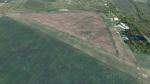
Aeroclub Parana, Argentina
(Category: MSFS 2020 > Scenery)
17.90Mb (49 downloads)
Aeroclub Ciudad de Parana - Argentina. This scenery have the actual layout of airfield and more accurate profile of runway, with new photoreal ground texture. Unzip in community folder and enjoy.
Posted Oct 18, 2020 15:34 by Javier Rodriguez
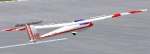
LET L33 SOLO for FS2000(1st version)
(Category: FS2000 > Gliders and Ultralites)
0.50Mb (49 downloads)
LET
L33 SOLO for FS2000(1st version). Designer:Alex Eylerts
Textures:Alex Eylerts Features: Full moving parts including
ailerons, elevators, rudder, pilots head, 3D pilot & cockpit,
transparent window, etc. 514K
Posted Jun 23, 2008 14:18 by archive
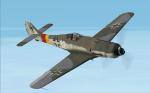
Focke Wulf Fw 190D-9 5JG301
(Category: CFS2 > Aircraft)
9.49Mb (48 downloads)
Focke Wulf Fw 190D-9
by Design Team Daedalus
Unit: 5./JG301 Bad Langensalza, May 1945
Pilot: unknown
The Fw 190D-9 combined the Fw 190A-8 fuselage and wings with the Jumo 213A-1 engine to create a higher altitude capable fighter than the A-8. The first production aircraft were completed at Focke-Wulf’s factory at Sorau in Silesia in late August 1944. Problems with engine meant that the second aircraft wasn’t completed until mid-September, but construction soon sped up. By the end of September production was underway at Focke-Wulf’s factory at Cottbus, and in October work began at Roland (WFG) at Nordenahm and Fieseler at Kassel. Junkers and Siebel produced parts, and Arado was also involved in the program. The total number produced is unclear, with at least 670 known and no records for December 1944 or February 1945 to the end of the war. 1,500 serial numbers are known to have been allocated to the D-9, but that doesn’t mean that all of these aircraft were completed.
The standard D-9 was armed with two 13mm MG 131 machine guns above the engine and two 20mm MG 151 cannon in the wing roots. It could also carry an ETC 501 or ETC 504 stores carriers below the fuselage.
The first D-9 unit, III./JG 54, began to convert to the type in September 1944, and by the end of October had 68 aircraft, of which only one had the MW 50 installed. However 53 had been given a new Junkers kit that increased the manifold pressure in the engine and boosted power from 1,750hp to around 1,870hp.
By the end of December 1944 there were 183 D-9s in service with three units (III./JG 54, II./JG 26 and III./JG 26), with some equipped with both the MW 50 and Junkers kits, some with one or the other and some without either. However new aircraft coming off the production line mainly had both.
Early in 1945 the D-9 was issued to JG 2, JG 3, JG 6, JG 51 and JG 301, although these units normally operated a mix of types. In service the D-9 was considered to be as good as its main opponents, in particular the Merlin powered P-51 Mustangs and the Griffon powered Spitfire Mk.XIV. It handled better than the Fw 190A, was faster and climbed quicker. It could out-turn most Soviet fighters at the normal combat levels, and was quicker in the dive than the Yak-3 or Yak-9.
It was a very good fighter for that time but was too little too late to have any effect on the course of the war.
--------------------------------------------------------------------------------------------------------------------------------------------------------------------
Captain Kurt developed the model from the old Pstrany Dora model - with permission - as a starting framework and updated the shape, and added multiple details, new parts, new VC, and animations. The original Pstrany airfiles, and Dora weapons models for the drop tanks, weapons, and racks are still used as is the Jumo sound package (included)
Captain Kurt also created the camouflage paint, and the 2D instrument panel.
Posted Feb 7, 2026 22:56 by Design Team Daedalus

FS2004 KOREAN Airbus A350-900 AGS-5GC.
(Category: FS2004 > Civil Jets)
5.99Mb (48 downloads)
FS2004 KOREAN Airbus A350-900 AGS-5GC.
Introducing Ground Crew into AGS (Animated Ground Servicing).
Aircraft, panel, ground animations, night effect and paint by Camil Valiquette. (CamSim)
Posted Jan 3, 2026 17:05 by Camil Valiquette
Macchi MC200 series XXI
(Category: CFS2 > Aircraft)
9.19Mb (48 downloads)
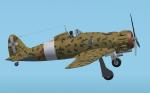
Macchi C.200 Saetta series XXI
Unit: 83a Squadriglia, 18 Gruppo at Abu Haggag, October 1942
When Italy entered the war on 10 June 1940 there were 144 Macchi C.200 available for operations. Until late 1941 the Saetta was the frontline fighter of the Regia Aeronautica. It operated on all fronts, with the exception of the short Italian intervention in the Battle of Britain in late 1940. It originally had an enclosed sliding canopy, but pilots did not like it. A half canopy open at the top and opening outwards was manufactured thereafter and the original canopies were replaced in the field. Later series reduced the canopy further with two glass deflector wings at the windscreen with a small shoulder height door that was often discarded as too confining -- as represented by this model.
After a short appearance in the skies of France, the M.C. 200 saw action over Malta escorting bombing missions. It also saw service on the Greek-Albanian front performing similar duties.
In April 1941 the first Macchi C.200 arrived in North Africa. They fought in a number of air campaigns during Rommel s first advance into Cyrenaica. In this period the Saetta clashed with the Hawker Hurricanes of the Western Desert Air Force. The Saetta proved to be an equal opponent for the legendary British fighter.
Posted Dec 8, 2025 22:22 by Captain Kurt
Bf109E-1_9.JG77
(Category: CFS2 > Aircraft)
7.82Mb (48 downloads)
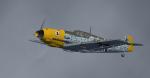
Messerschmitt Bf 109E-1
by Design Team Daedalus
Unit: 9./JG 77 May, 1941 Crash landed at Malaoi, Peloponnese, Greece
Pilot: Unknown
To improve on the performance afforded by the 690 hp Jumo 210 of the earlier Bf 109 versions, the larger, longer 1080 hp Daimler-Benz DB 601A engine was used. As a consequence, the nose, cooling system, and wings had to be redesigned resulting in the classic Bf 109 series. In late 1938, the Bf 109E entered production. It entered general service with the Luftwaffe in the spring of 1939. A total of 1,183 E-1 were built, 110 of them were E-1/B fighter bomber versions.
There were many small differences between individual E-1s because the E-1 was often modified in the field by groundcrew and rear area repair depots. The production standard was lightly armed with two 7.92mm MG17s above the engine and two in the wings and had no pilot armor. Mods included types of pilot head armor,E-4 type squared canopies, E-7 type pointed spinners, etc., but changing the wing MG17 armament required new different wings.
So each model we have created has its own unique features. This aircraft was modified with an E-4 squared type canopy, curved pilot head armor and a capped spinner.
By the time the later Bf 109E-4 and Bf 109E-7 marks were equipping the Jagdgeschwaders a program was initiated to withdraw and remanufacture the surviving E-1s to either full E-4 or E-7 standard.
Pstrany is the primary model author with some small model refinement and additions by Captain Kurt as the model was collaborated on during development. Captain Kurt created the textures for each, the 2D instrument panel, the individual .dp files, air files and aircraft.cfg files.
Posted Oct 12, 2025 16:16 by Design Team Daedalus