



All Time Popular > Page 5496
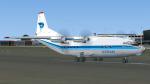
Vladimir Zhyhulskiy Antonov An-12 Update
(Category: FSX > Props)
0.24Mb (64 downloads)
FDE and CFG update for FSX for the Antonov An-12 from Vladimir Zhyhulskiy.
Required files:
required file
Posted Oct 8, 2026 16:32 by Toby Boult
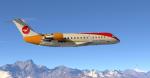
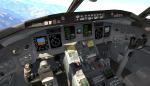
P3D Bombardier CRJ-200 Saurya Airlines package
(Category: Prepar3d > Civil Jets)
133.09Mb (64 downloads)
P3D Bombardier CRJ-200 Saurya Airlines package. Saurya Airlines is a Nepalese airline based in Kathmandu's Tribhuvan International Airport, and operating 2 CRJ-200.
Bombardier CRJ-200 converted from FS2004 model to native FSX and native P3Dv4 with permission from Mitsushi Yutaka with new upgraded VC by David Hoeffgen. Includes built in FMC, working wipers and more (see VC docs in folder). High quality model. Fixed views and wheel levels. All credit to the fantastic talents of the Iris team and David Hoeffgen. Thanks to Alex Siu for the great textures. Other updates by Chris Evans.
Posted Sep 21, 2026 18:22 by chris evans
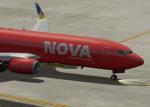
FSX/P3D TDS Boeing 737-800(BDSF) SuperNova UR-NPA textures
(Category: FSX > Civil Jets)
4.42Mb (64 downloads)
While established in Ukraine, SuperNova currently operates in Europe due to the closed Ukrainian airspace, with a base at Rzeszow (Poland) and expanding services to Liege, Belgium. As of mid 2026 this machine can be seen operating cargo flights out of Liege in Belgium and Frankfurt Hahn in Germany to destinations such as Tel Aviv and Ostrava (Czechia) and between other city pairs on contract for other companies to interesting locations like Belgrade, Tangier, Zaragoza etc.
This file contains textures only and requires a working TDS B738 package which can be found here at Simviation.
Required files:
required file
Posted Sep 4, 2026 08:36 by Dean Stringer
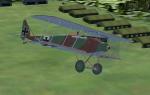
Halberstadt D.II
(Category: CFS2 > Aircraft)
3.11Mb (64 downloads)
Halberstadt D.II
The Halberstadt D.II entered service in June 1916 at a time when the Fokker E.III Eindeckers had lost air supremacy to the Allies. Their good flying characteristics made them more popular than their contemporaries of the Fokker D.I-IV. Like other early German fighter types, the D.II was at first supplied in ones and twos to the ordinary reconnaissance units or Fliegertruppe of the Luftstreitkräfte, then gathered into small specialised fighter units – the Kampfeinsitzerkommandos.
When the first true fighter Jagdstaffeln were formed in mid-1916, the Halberstadt was initially the best fighter available, and was used by Oswald Boelcke to demonstrate his famous pioneering air fighting tactics (the Dicta Boelcke) to the new units. As the new Albatros fighters came into service the Halberstadts were quickly replaced, although a few survived into early 1917. Even Manfred von Richthofen flew a Halberstadt D.II for a few weeks in March 1917, after the spar of the lower wing of his Albatros D.III cracked in combat. He scored 6 of his 80 victories with the type. The Halberstadt was also supplied to the Ottoman Empire, serving in the Middle East theater.
---------------------------------------------------------------------------------------------------------------
CREDITS:
Captain Kurt: Model, textures. panel and air files.
Wolfi: Pilot figure was developed from his freeware Japanese pilot .fsc source file.
Kelticheart: Prop spinning texture
Martin Klein" Gauges are by Martin Klein (with a couple of texture change outs by Captain Kurt)
Posted Jun 13, 2026 16:34 by Captain Kurt
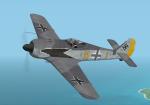
Focke Wulf Fw 190A-3 9JG2
(Category: CFS2 > Aircraft)
3.46Mb (64 downloads)
Focke Wulf Fw 190A-3
Unit: 9./JG2, Poix, France in the fall of 1942
Pilots: Ofw. Fritz Hartmann and Ltn. Heribert Hufnagl
This aircraft had the outer two wing cannons removed.
The Fw 190 series entered combat with the A-1 model in September 1941 proving a huge shock to the RAF as it was clearly superior to the Spitfire V (which was the primary RAF fighter at the time) in everything except turning radius. However these early versions suffered from severe engine overheating problems and fires which kept serviceability rates low throughout 1941. This was somewhat solved in the field by JG26 technical officers by rerouting the exhaust pipes and opening cooling slots in the fuselage aft of the engine. These changes were introduced into the production line for the following A-2 models which began arriving in December 1941.
The Fw 190 A-3 began deliveries in the spring of 1942 with the change to the more powerful BMW 801D-2 1700hp engine using 96 octane fuel, replacing the unreliable BMW 801C-1 in the Fw190 A-2. Fw 190A-3 was externally identical to the A-2, which makes the two variants extremely difficult to tell apart. The only positive visual clues could only be seen up-close: the C3 fuel triangles and the Werknummer. Like the A-2, it had two cowl mounted MG 17 machine guns, two inboard wing mounted MG 151 20mm cannons with protruding barrels and wing root blisters, plus two MG FF 20mm cannons in outboard positions, with underwing bulges. The slower firing MG FF cannons with its limited 90 rpg were often removed in the field and panel bulges replaced with flat panels.
Besides the difference in the number of wing cannons, the only other major variant was the FW 190A-3/U3 fighter bomber which had an under-fuselage mounted bomb rack ETC 501 for carriage of 500 kg of bombs (1 500 kg, 1 250 kg or 4 50 kg on the ER4 adapter) or an external drop tank of 300 liter capacity for long range fighters. Only the two wing cannons were carried and usually had the retractable small gear cover doors removed which would interfere with the ordinance loads.
By early 1943, 509 A-3s had been built. By mid 1943 it was being relagated to opertional training organizations.
--------------------------------------------------------------------------------------------------------------------------------------------------------------------
Captain Kurt developed the model using some parts of the Design Team Daedalus Fw 190D-9 model, which in turn was developed from the old Pstrany Dora model by Captain Kurt - with permission. The new model added multiple details, new parts, new VC, and animations. The air files are a further development of the Design Team Daedalus FW 190 series.
Captain Kurt also created the camouflage paints, and the 2D instrument panel.
Keticheart: prop blur .bmp
AliCat: o2 Wachter and Sauerstoff guages
FSD: most of the gauges
other gauge authors are unknown
Posted Jan 12, 2026 16:20 by Captain Kurt
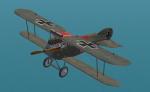
Phönix D.II
(Category: CFS2 > Aircraft)
6.02Mb (64 downloads)
Phönix D.I / D.II
The Phönix D.I biplane was intended as a replacement for the Hansa-Brandenburg D. I. It was produced in smaller numbers (120 D. I, 45 D. II, and 48 D. IIa fighters) than the Hansa-Brandenburg. The Phönix D.I began production in August 1917 and the D.II replaced the D.I in production in March 1918 . The Phönix D-series fighters are generally considered the best fighters designed and produced in Austria-Hungary.
Previously, the Phönix Flugzeug-Werke firm had been contracted to produce the Hansa-Brandenburg D.I fighter under license. It became apparent by 1917 that the infamous Star-strutter could not be developed further, and the company embarked on a new aircraft. The design eventually incorporated a fuselage similar to the D.I and also sported wings of unequal span that ended in rounded wingtips. It was also considerably more powerful, with a Hiero 200- horsepower engine. It located the machine guns within the engine cowling which enhanced streamlining but placed the guns beyond the pilot’s reach if they jammed. The resulting craft was faster in level flight but somewhat unstable and slow-climbing. In December 1917 it entered service as the Phönix D.I and was deployed with army and navy units. The new machine was far from perfect, but it represented a dramatic improvement over the earlier Star-strutter, proving to be a match for Allied fighters.
The Phönix D.II fighter was designed to improve performance and maneuverability. The wing dihedral was eliminated, new high aspect ailerons, a new tail plane design with balanced elevators quickened aircraft response. The D.IIa was identical but used an up rated Hiero 230 hp engine. The D.II entered service in May 1918.
---------------------------------------------------------------------------------------------------------------
The model, textures. panel and air files are by Captain Kurt. The pilot figures were developed from Wolfi's freeware Japanese pilot .fsc source file. The prop spinning texture is by Kelticheart.
Gauges are by Martin Klein with texture change outs by Captain Kurt, .
Posted Dec 30, 2025 15:07 by Captain Kurt

N1K2-J Shiden Kai
(Category: CFS2 > Aircraft)
9.78Mb (64 downloads)
Kawanishi N1K2-J Shiden Kai (George)
Unit: 343 Kokutai, 407th Hikoutai. Matsuyama Air Base Japan. March 1945
Pilot: P/O Kouji Ohnara
The N1K2-J Shiden Kai (Japanese for "Violet Lightning") was the best fighter used in significant numbers by the Japanese Navy during World War II. Known
by the Allies as the "George," this maneuverable, heavily-armed fighter was a formidable opponent in the closing months of the war.
The Shiden Kai was considerably better than the Japanese Navy's most common fighter, the A6M Zero. With a top speed of 369 mph, the N1K2 was about 20
mph faster than the A6M Zero. It had CO2 fire suppression systems in the fuel tanks so it did not burn easily as other Japanese fighters did. The
heavier Shiden Kai also possessed surprisingly good maneuverability due to a mercury switch that automatically extended the flaps during turns. These
"combat" flaps created more lift, thereby allowing tighter turns. Moreover, its four 20 mm automatic cannon provided greatly increased firepower than
earlier Japanese designs. Unlike the A6M Zero, the Shiden Kai could compete against the best late-war U.S. Navy and U.S. Army Air Forces fighters.
It first entered combat early in 1945, and over 400 were produced before the war ended (200 of
the N1K2-J and 200 of the slightly improved N1K2-Ja)
Credits
Captain Kurt: Aircraft model, VC, paint textures, drop tank, and .dp
Wolfi: Crew figure
Gauges by: ACWai, Wolfi and Microsoft
Prop spinning disc texture by:Kelticheart
Flight files: Microsoft stock with modifications.
Sound: Microsoft stock
Posted Dec 15, 2025 16:52 by Captain Kurt

Albatros D.III
(Category: CFS2 > Aircraft)
3.60Mb (64 downloads)
The Albatros D.III was a development of the Albatros D.II. Having investigated the construction of captured Nieuport fighters, Albatros engineers designed the lower wing of the D.III narrower and shorter than the upper, supported by V-shaped struts. The Mercedes 6 cylinder engine was increased to 180hp from 160hp. Wing tips became swept, that helped to avoid wings vibration. The aileron control rods were drawn through the lower wing, and the radiator was displaced from the fuselage side to the middle of the upper wing. Weight reduction was one of the main objectives at that time.
Test flights began in August – September of 1916, and in December 1916 the plane was delivered to fighter squadrons. Several months of combat flights revealed that plane could lose its lower wing in a steep dive or in a sharp turn. Water from radiator, placed on the upper wing, poured out onto the machineguns making firing impossible. After this, radiator was placed to the right side of the pilot. By June 1917 Albatros started using new Daimler’s cellular radiator that helped to solve problem with engine overheating.
The plane was manufactured in Albatros Werke and Ostdeutsche Albatros Werke (OAW) factories. The OAW version is principally identified by the use of a rounded rudder, which later became standard on the later D.V series. In total 1346 copies of Albatros D.III were built.
---------------------------------------------------------------------------------------------------------------
The model, textures. panel and air files are by Captain Kurt. The pilot figures were developed from Wolfi's freeware Japanese pilot .fsc source file. The prop spinning texture is by Kelticheart.
Gauges are by Martin Klein with texture change outs by Captain Kurt
Posted Nov 18, 2025 22:17 by Captain Kurt

P3D Captain Sim C-130 USFS Tanker Pack
(Category: Prepar3d > Payware)
7.65Mb (64 downloads)
USFS repaint pack for Scorch00's MAFFS II Pack. Requires the Captainsim C-130 in P3D to work. Can work with the FSX CS C-130 just requires changing some aircraft.cfg stuff.
Contains Tanker 116, 118, and 119.
Posted Jun 22, 2025 04:50 by Delta


FS2000 Classic American VFR Ground Textures Part 1
(Category: FS2000 > Scenery)
4.79Mb (64 downloads)
FS2000 Classic American VFR Ground Textures. The default basic ground textures featured in FS2000 seem to favor high altitude airliner type heavy aircraft. For those of us who like to fly low and slow classic aircraft we have created these all original textures to change the look of FS2000 to a more painterly, colorful 3D appearance at low to medium altitudes (below 5000ft AGL). These textures favor Classic America by placing rural farm roads on the north/south grid, wider city streets and larger scale structures. After installation, you will be able to switch textures between the CAVFR and the default textures using the included handy switching program. By Jack Hill and Bill Lyons. 2 files - both are required. File 1 of 2.
Posted May 9, 2024 22:03 by Jack Hill and Bill Lyon