



All Time Popular > Page 5501
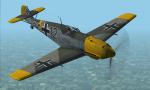
Bf109E3_8.JG52
(Category: CFS2 > Aircraft)
7.74Mb (11 downloads)
Messerschmitt Bf 109E-3
by Design Team Daedalus
Unit: 8./JG 52 1940/41 Rumania
Pilot: unknown
To improve the performance of the Bf 109E, the last two real prototypes (V16 and V17) were constructed. These received some structural improvements and more powerful armament. Both were the basis of the Bf 109 E-3 version. The E-3 was armed with the two MG 17s above the engine and one MG FF cannon in each wing. Some units began recieving the E-3 by September 1939. A total of 1,276 E-3 were built, including 83 E-3a export versions.
There were many small differences between indivual E-3s because the E-3 was often modified in the field by groundcrew and rear area repair depots. The production standard had no pilot armor. Mods included types of pilot head armor,E-4 type squared canopies, E-7 type pointed spinners, etc.
So each model we have created has its own unique features. This aircraft was modified with flat plate and curved top pilot head armor, an armored glass windscreen and rear view mirror.
Pstrany is the primary model author with some small model refinement and additions by Captain Kurt as the model was collaborated on during development. Captain Kurt created the textures for each, the 2D instrument panel, the individual .dp files, air files and aircraft.cfg files.
Posted Oct 12, 2025 15:51 by Design Team Daedalus
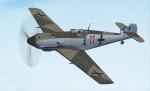
Bf109E3_2.JG2
(Category: CFS2 > Aircraft)
8.06Mb (11 downloads)
Messerschmitt Bf 109E-3
by Design Team Daedalus
Unit: 2./JG 2 Spring 1940 Frankfurt, Germany
Pilot: unknown
To improve the performance of the Bf 109E, the last two real prototypes (V16 and V17) were constructed. These received some structural improvements and more powerful armament. Both were the basis of the Bf 109 E-3 version. The E-3 was armed with the two MG 17s above the engine and one MG FF cannon in each wing. Some units began recieving the E-3 by September 1939. A total of 1,276 E-3 were built, including 83 E-3a export versions.
There were many small differences between indivual E-3s because the E-3 was often modified in the field by groundcrew and rear area repair depots. The production standard had no pilot armor. Mods included types of pilot head armor,E-4 type squared canopies, E-7 type pointed spinners, etc.
So each model we have created has its own unique features. This aircraft was the factory production standard.
Pstrany is the primary model author with some small model refinement and additions by Captain Kurt as the model was collaborated on during development. Captain Kurt created the textures for each, the 2D instrument panel, the individual .dp files, air files and aircraft.cfg files.
Posted Oct 12, 2025 15:46 by Design Team Daedalus

Bf109E-7 IIIJG5
(Category: CFS2 > Aircraft)
8.27Mb (11 downloads)
Messerschmitt Bf 109E-7
by Design Team Daedalus
Unit: III./JG5 Petsamo, Finland 1942
Pilot: Hptm. Gunther Scholz
Following the E-4, the E-7 was the next major production variant, entering service and seeing combat at the end of August 1940. One of the limitations of the earlier Bf 109Es was their short range of 660 km (410 mi) and limited endurance, as the design was originally conceived as a short-range interceptor. The E-7 rectified this problem as it was the first Bf 109 subtype to be able to carry a drop tank, usually the standardized Luftwaffe 300 L (79 US gal) capacity unit mounted on a centre-line rack under the fuselage, which increased its range to 1,325 km (820 mi). Fuel from the drop tank was pumped to the internal fuel tank via a large fuel line that ran up and along the inside starboard wall of the cockpit, with a clear sight glass located in the fuel line's main span so the pilot could easily see the flow of fuel and know when the tank was empty. Alternatively, a bomb could be fitted and the E-7 could be used as a Jabo fighter-bomber. Previous Emil subtypes were progressively retrofitted with the necessary fittings for carrying a drop tank from October 1940. Early E-7s were fitted with the 1,100 PS DB 601A or 1,175 PS DB 601Aa engine, while late-production ones received 1,175 PS DB 601N engines with improved altitude performance the latter was designated as E-7/N. A total of 438 E-7s of all variants were built.
There were many small differences between individual E-7s because the E-7 was often modified in the field by groundcrew and rear area repair depots. The production standard had no pilot armor. Mods included types of pilot head armor, armored windscreen, tropical sand filters, etc.
So each model we have created has its own unique features. This aircraft was modified with a flat plate with curved top pilot head armor and an armored glass windscreen.
Pstrany is the primary model author with some small model refinement and additions by Captain Kurt as the model was collaborated on during development. Captain Kurt created the textures for each, the 2D instrument panel, the individual .dp files, air files and aircraft.cfg files.
Posted Oct 12, 2025 15:35 by Design Team Daedalus
LG2.jpg-thumb.jpg)
Bf109E-7 3.LG2
(Category: CFS2 > Aircraft)
8.17Mb (11 downloads)
Messerschmitt Bf 109E-7
by Design Team Daedalus
Unit: 3.(J)LG2 Calais-Marck, France Aug 1940
Pilot: unknown
Following the E-4, the E-7 was the next major production variant, entering service and seeing combat at the end of August 1940. One of the limitations of the earlier Bf 109Es was their short range of 660 km (410 mi) and limited endurance, as the design was originally conceived as a short-range interceptor. The E-7 rectified this problem as it was the first Bf 109 subtype to be able to carry a drop tank, usually the standardized Luftwaffe 300 L (79 US gal) capacity unit mounted on a centre-line rack under the fuselage, which increased its range to 1,325 km (820 mi). Fuel from the drop tank was pumped to the internal fuel tank via a large fuel line that ran up and along the inside starboard wall of the cockpit, with a clear sight glass located in the fuel line's main span so the pilot could easily see the flow of fuel and know when the tank was empty. Alternatively, a bomb could be fitted and the E-7 could be used as a Jabo fighter-bomber. Previous Emil subtypes were progressively retrofitted with the necessary fittings for carrying a drop tank from October 1940. Early E-7s were fitted with the 1,100 PS DB 601A or 1,175 PS DB 601Aa engine, while late-production ones received 1,175 PS DB 601N engines with improved altitude performance the latter was designated as E-7/N. A total of 438 E-7s of all variants were built.
There were many small differences between individual E-7s because the E-7 was often modified in the field by groundcrew and rear area repair depots. The production standard had no pilot armor. Mods included types of pilot head armor, armored windscreen, tropical sand filters, etc.
So each model we have created has its own unique features. This aircraft was modified with a flat plate with curved top pilot head armor.
Pstrany is the primary model author with some small model refinement and additions by Captain Kurt as the model was collaborated on during development. Captain Kurt created the textures for each, the 2D instrument panel, the individual .dp files, air files and aircraft.cfg files.
Posted Oct 12, 2025 15:33 by Design Team Daedalus
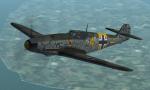
Bf109F-2_6.JG54
(Category: CFS2 > Aircraft)
17.30Mb (11 downloads)
Messerschmitt Bf109F-2
by Design Team Daedalus
Unit: 6./JG54 Russia July, 1941
Pilot: Lt. Hans Beisswenger
There is no "standard" Bf 109F-2, as the production run underwent many small modifications and there were field implemented updates along the way. So each model we have created has it's own unique features.
Pstrany developed the models using Paul Rebuffat's Messerschmitt model - with permission - as a starting framework and updated the shape, and added a plethora of details, new parts, and ideas. Pstrany also developed the models for the drop tanks, weapons and racks.
Captain Kurt created paints for each, the 2D instrument panel, the individual .dp files, the air files and the aircraft.cfg files.
Mav SCASM edited each model so that they have animated wing slats, drop tanks, and other features, as well as optimizing models for the best possible framerates. Mav also developed the idea for the 2d panel to be offset for the Revi gunsight to match the CFS2 reticle.
The engine sound package is by Lawdog2360
Posted Oct 8, 2025 23:04 by Design Team Daedalus
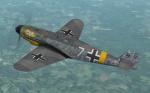
Bf109F-2_1.JG3
(Category: CFS2 > Aircraft)
17.28Mb (11 downloads)
Messerschmitt Bf109F-2
by Design Team Daedalus
Unit: 1./JG3 Iyzk, Russia July, 1941
Pilot: Oblt. Robert Olejnik
There is no "standard" Bf 109F-2, as the production run underwent many small modifications and there were field implemented updates along the way. So each model we have created has it's own unique features.
Pstrany developed the models using Paul Rebuffat's Messerschmitt model - with permission - as a starting framework and updated the shape, and added a plethora of details, new parts, and ideas. Pstrany also developed the models for the drop tanks, weapons and racks.
Captain Kurt created paints for each, the 2D instrument panel, the individual .dp files, the air files and the aircraft.cfg files.
Mav SCASM edited each model so that they have animated wing slats, drop tanks, and other features, as well as optimizing models for the best possible framerates. Mav also developed the idea for the 2d panel to be offset for the Revi gunsight to match the CFS2 reticle.
The engine sound package is by Lawdog2360
Posted Oct 8, 2025 23:02 by Design Team Daedalus
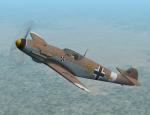
Bf109F-4ZTrop_6.JG3
(Category: CFS2 > Aircraft)
15.86Mb (11 downloads)
Messerschmitt Bf109F-4/Z Trop
by Design Team Daedalus
Unit: 6./JG3 Castel Benito, Libya, 1942
Pilot: Uffz. Franz Schwaiger
There is no "standard" Bf 109F-4, as the production run underwent many small modifications and there were field implemented updates along the way. So each model we have created has it's own unique features.
Pstrany developed the models using Paul Rebuffat's Messerschmitt model - with permission - as a starting framework and updated the shape, and added a plethora of details, new parts, and ideas. Pstrany also developed the models for the drop tanks, weapons and racks.
Captain Kurt created paints for each, the 2D instrument panel, the individual .dp files, the air files and the aircraft.cfg files.
Mav SCASM edited each model so that they have animated wing slats, drop tanks, and other features, as well as optimizing models for the best possible framerates. Mav also developed the idea for the 2d panel to be offset for the Revi gunsight to match the CFS2 reticle.
Posted Oct 8, 2025 22:55 by Design Team Daedalus
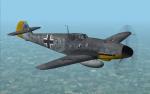
Bf109F4Bf109F-4_8.JG26
(Category: CFS2 > Aircraft)
16.11Mb (11 downloads)
Messerschmitt Bf109F-4
by Design Team Daedalus
Unit: 8./JG26 summer 1941 France
Pilot: unknown
There is no "standard" Bf 109F-4, as the production run underwent many small modifications and there were field implemented updates along the way. So each model we have created has it's own unique features.
Pstrany developed the models using Paul Rebuffat's Messerschmitt model - with permission - as a starting framework and updated the shape, and added a plethora of details, new parts, and ideas. Pstrany also developed the models for the drop tanks, weapons and racks.
Captain Kurt created paints for each, the 2D instrument panel, the individual .dp files, the air files and the aircraft.cfg files.
Mav SCASM edited each model so that they have animated wing slats, drop tanks, and other features, as well as optimizing models for the best possible framerates. Mav also developed the idea for the 2d panel to be offset for the Revi gunsight to match the CFS2 reticle.
Posted Oct 8, 2025 22:47 by Design Team Daedalus
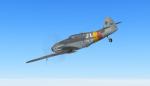
Bf109G10 16.JG301
(Category: CFS2 > Aircraft)
12.18Mb (11 downloads)
Messerschmitt Bf109G-10 Erla built
by Design Team Daedalus
Unit: 16./JG301 Erfurt Nord, Germany May 1945
Pilot: Unknown
The Bf109G-10 was an attempt by the RLM to standardize the Bf109 sub-types using the new DB 605D engine fitted with MW-50 (methanol water 50/50 mix) boost giving an increase to 1775hp.
However this attempt was a massive failure and there is no "standard" Bf 109G-10. The only consistent features were the use of the "Erla Haube" canopy and a version of the DB 605D engine requiring a streamlined cowling to cover the larger engine configuration.
The Erla factory used a completely different engine cowling type with the port side featuring a rectangular fairing behind the engine and an ellipse shape on the starboard side. The WNF and Regensburg plants used an ellipse shape on both sides and had small chin bulges. Regensburg production seems to have been mostly conversions of existing G6 and G-14 airframes.
Most used larger main wheels which required the larger rectangular shaped upper wing fairings, but some used the smaller wheels with the smaller teardrop shaped upper wing fairings. While all had the tall horizontal tail type, they used different rudder types. Different types of oil coolers, tail wheel struts, antenna masts, etc. from subcontractors were available at different times during the production runs.
Armament was different too. Most WNF built G-10s were the G-10/U4 subtype using a 30mm cannon in the nose rather than the 20mm used in the Erla and Regensburg built models.
Given the many different features that existed on individual G-10 aircraft, each model we have created has its own unique features.
Pstrany began the development of the models using Paul Rebuffat's Messerschmitt model - with permission - as a starting framework and updated the shape, and added a plethora of details, new parts, and ideas. Pstrany also developed the models for the drop tanks, weapons and racks.
Captain Kurt created paints for each, the 2D instrument panel, the .dp files, the air files and the aircraft.cfg files.
Mav SCASM edited each model so that they have animated wing slats, drop tanks, and other features, as well as optimizing models for the best possible frame rates. Mav also developed the idea for the 2d panel to be offset for the Revi gun sight to match the CFS2 reticle.
Posted Oct 5, 2025 14:41 by Design Team Daedalus
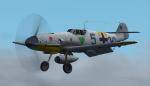
Bf109G-2_7.JG54
(Category: CFS2 > Aircraft)
11.81Mb (11 downloads)
Messerschmitt Bf109G-2
by Design Team Daedalus
Unit: 7./JG54 Isotscha Airfield, Smolensk, Russia, Winter 1942-43
Pilot: unknown
During the summer of 1941, the Messerschmitt design team was engaged in updating the BF 109F-4 as the dictates of the air war was forcing the need for greater speeds. The result was the Gustav series, of which the first substantial production run was the Bf 109G-2. Adopting the more powerful but heavier Mercedes Benz DB 605 engine required airframe and landing gear strengthening which also added weight. But it was felt the increase in speed made the loss of some maneuverability acceptable. The fuel filler access was moved to the spine behind the cockpit. No change was required for the cowling shape but a deeper oil cooler was needed. The broad blade of the F4/Z was made standard. The lower quarter cockpit window panel was deleted and vent scoops could be added to the new replacement metal panel. The wheel wells reverted to a squared end in anticipation of wheel covers that in the event were not adopted. Generally speaking the appearance of the G-2 was very similar to the F-4 without close examination. Deliveries of the G-2 began in May 1942 with 1,587 produced by February 1943.
However, there is no "standard" Bf 109G-2. Although production only ran 10 months before the G-3 and G-4 were introduced, three separate companies and multiple sub-assembly production facilities were involved which inevitably produced minor variations, such as pilot head armor type, cockpit vents and tail wheel types. So each model we have created has its own unique features to portray the specific aircraft presented as accurately as possible.
This aircraft had its landing gear doors removed to prevent snow build up, cockpit vents on both cockpit sides, a 2 piece curved top pilot armor and a non-retractable tail wheel.
Pstrany developed the models using Paul Rebuffat's Messerschmitt model - with permission - as a starting framework and updated the shape, and added a plethora of details, new parts, and ideas. Pstrany also developed the models for the drop tanks, weapons and racks.
Captain Kurt created paints for each, the 2D instrument panel, the individual .dp files, the air files and the aircraft.cfg files.
Mav SCASM edited each model so that they have animated wing slats, drop tanks, and other features, as well as optimizing models for the best possible framerates. Mav also developed the idea for the 2d panel to be offset for the Revi gunsight to match the CFS2 reticle.
Posted Oct 4, 2025 21:44 by Design Team Daedalus